Thursday, May 9, 2024

Underwater microrobot swarms are coming.


"Innovative microrobots designed to mimic natural swarms can effectively remove both microplastics and bacterial contaminants from water, offering a reusable solution to water pollution. (Artist’s concept.) Credit: SciTechDaily.com" (ScitechDaily, Microrobots Swarm the Seas, Capturing Microplastics and Bacteria [Video])


Microrobots are the next-generation tools for civil and military purposes. Microrobot swarms can clean water by collecting poisonous chemicals from water. Microrobots can colect oil and platics. They can capture bacteria from wastewater. 

 In some models, the microrobot can carry a filter system.  Those microrobots can be quadcopters that can operate airborne and underwater. The microrobots can filter the air the same way. They can pump polluted air through filters. And that can be useful at least in closed spaces like rooms. 

The robot drives polluted water through that filter. The filter can separate microplastics from water. Or the robot can act like a pelican fish. And that allows them to open their "stomach" and collect that oil from water. The microrobots can also map sealife and magma eruptions. They can go to places that are too dangerous for humans. 

Those systems can follow the whales and then map those animal's communication. The microrobots can slip into shipwrecks and even animals' stomachs. There, machines can research what those animals eat in the natural environment. And they can take samples from deep sea animal tissues. 

In the world of intelligence and military. The micro drone swarms can operate in recon and attack roles. Microdrones can protect naval bases and all other important targets. In those cases, the microrobot swarms can wait at the bottom of the sea, and then they can deny the attempts to enter the base. 

Microrobots can connect to the communication antennas and resend data transmission to the opponent. The microrobot can also hang a submarine's shell and send tracking signals. Micromachines can carry explosives or acoustic devices that can make small holes into the submarine's shell or damage its propellers. If the micromachine makes a centimeter hole in the submarine's hull at 500 m depth. Water pressure can break the shell. 

The microrobot swarms can make the Status-6 nuclear torpedo look like a toy. 

But the microrobots can act as devastating weapons. Underwater microrobots can carry plutonium and lithium-deuteride. When those drones get the order, they can drive themselves together. That thing forms a critical mass. And it can cause the ultimate destruction. The modular hydrogen bombs are machines that the microrobot swarms can turn into reality. 


https://scitechdaily.com/microrobots-swarm-the-seas-capturing-microplastics-and-bacteria-video/

Wednesday, May 8, 2024

Metamaterials and AI-driven processes have no limits in material research.


"ChemCrow revolutionizes chemical research by integrating advanced AI with specialized tools, enabling efficient synthesis planning and execution. Credit: SciTechDaily.com" (ScitechDaily, ChemCrow: The Next Frontier in AI-Driven Chemical Synthesis)

New metamaterials can make reflection-free surfaces. And they can also make new nanorobots possible. The waving materials can deny the soundwave. Maybe electromagnetic reflection from the surface. The waving movement makes it possible to create surfaces that pull all pressure or soundwaves into them. 

The waving metamaterial can also make new ultra-accurate loudspeakers possible. The new molecular machines require some systems, that make them move in the right direction. The new metamaterials can also oscillate and create nanobubbles in the right locations. That can close blood vessels and destroy tumor cells. 

Those waving structures can also used in swimming nanomachines that move like snakes or eels. That material can also make a stretch or wave on the miniature robot's shell. And that stretch can push water back moving the miniature robot forward. 

New optical metamaterials can control light with a very high accuracy. In some models, the optical metamaterial has two 2D atom layers. Then the structure drives photons and electromagnetic radiation between those layers. There could be a structure that puts electromagnetic radiation jump between those layers. 

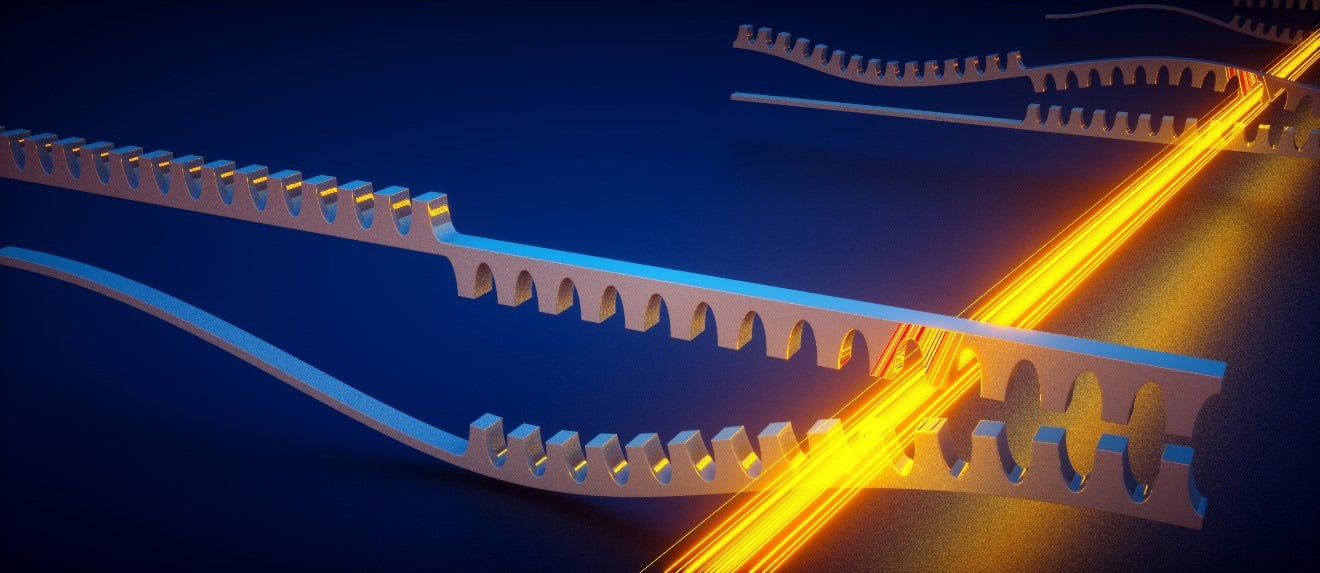
"Artist impression of the bosonic Kitaev chain: multiple mechanical string resonators are linked to form a chain using light. Mechanical vibrations (sound waves) are transported and amplified along the chain. Credit: Ella Maru Studio" (ScitechDaily, Unprecedented Sound Waves – New Metamaterial Redefines Wave Amplification)

Then electromagnetic radiation delivers its energy slower than normally in that material. Quantum metamaterials can be tools, that make surfaces invisible to the radar and even the human eye. The metamaterial can conduct light into one point, which means it doesn't send reflection in all directions. If the system can control the direction of the reflection, it can make an object invisible to people who are not standing on the side where the reflecting photons travel. 


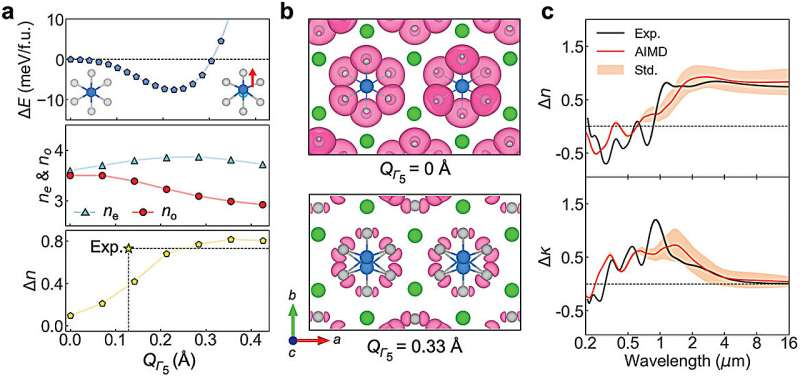
Optical anisotropy enhanced by Ti a–b plane displacements. Credit: Advanced Materials (2024). DOI: 10.1002/adma.202311559 (Phys.org, Materials scientists reveal pathway for designing optical materials with specialized properties)

The new metamaterial bases the little or controlled disorder in the system. If the particles in metamaterials move all the time. The idea is that. The light could push particles. And moving atoms pull photon's energy in them. The material could transform electromagnetic energy into kinetic energy. In that thing can form controlled "dust" that denies the reflection. The dust or active particles can be between 2D atomic structures. And that could make the layer invisible. 


Developers can also use two-layer metamaterials for next-generation ion technology.  The system can make new very highly accurate ion engines possible. The system can create two-layer structures, and ions travel between those structures. 

Researchers can use this ion-based technology to create a new type of very long molecule chains. The same system can act as a fundamental engine system for aircraft that don't have visible exhaust tubes. 

The metamaterials can also act as a tool that makes it possible to create new types of artificial molecular structures. The next-generation AI-driven chemical synthesis will revolutionize technology. There is no limit to the length of the peptide molecules. 

Developers can use these very long molecular chains to create a nano canvas, there as example, a submarine is covered using fibers or peptide molecules that cover the entire hull using molecules whose length is the same as a submarine. In that structure are no cuts. The entirety continues as one piece over the structure. 

When very long molecules slip into the cell, they can pull open. And that breaks the cell's shell. The other way is that the lasso-looking molecule starts to rotate or oscillate when the soundwave hits it. And that thing forms nanobubbles in the cell. The system must only drive those molecules into the right cells. 

The AI-controlled chemical synthesis can create a large number of complex molecules, that the AI can drive using acoustic or magnetic systems at the right point. The long molecules can act as universal medicines. 


https://phys.org/news/2024-05-materials-scientists-reveal-pathway-optical.html


https://scitechdaily.com/chemcrow-the-next-frontier-in-ai-driven-chemical-synthesis/


https://scitechdaily.com/unprecedented-sound-waves-new-metamaterial-redefines-wave-amplification/

Tuesday, May 7, 2024

The new way to detect dark matter


"Physicists at SLAC National Accelerator Laboratory are exploring a new method to detect dark matter using quantum devices, focusing on a lesser-known form called thermalized dark matter. Their approach involves utilizing quantum sensors, traditionally disrupted by unexplained energy intrusions, to potentially detect dark matter’s subtle energy impacts. This innovative research leverages the unique capabilities of quantum technology to potentially solve the long-standing mystery of dark matter detection. Credit: SciTechDaily.com" (ScitechDaily, Scientists Propose New Way To Search for Dark Matter)

Do dark matter particles impact material so often that sensors don't separate individual impacts? If the dark matter energy level is lower than the material. The impact is hard to detect. If the particle's energy form is different from what researchers think it's hard to detect. It's possible. That the particle travels slowly in space. 

But it spins very fast the particle can tunnel itself through material. If there is a radiation stylus at its poles or around its spin axle, that thing can make particles act like a drill that can push other particles away from its route without transmitting any energy in it. Dark matter may transport so small an energy impact into other particles that sensors cannot detect that interaction. 

The new idea to detect dark matter is based the AI and super cold aluminium. The idea is that the dark matter impacts with super cold aluminum, and the AI detects changes in that object's energy level. Dark matter interacts with gravity. 

So Earth should pack those, still theoretical, darl matter particles called weakly interacting massive particles (WIMP) around it. The WIMP particles that orbit Earth should be less energetic than interstellar or intergalactic WIMPs. 

Does the WIMP interaction happen so often that the detector cannot separate the individual particles? In that case, very often impacting dark matter particles causes a model that the impacts are the base energy level of material because constantly impacting WIMPs send radiation so often, that the sensor sees them as a base energy field or level. 

But if the aluminum detector's temperature is as near zero kelvin as possible, those impacts should raise the aluminum's energy level. When the system's temperature is as near as absolute zero as possible, it is in a stable quantum state. The impacting WIMPs should disturb that state, but the problem is that the object cannot reach absolute zero in nature. The system requires massive coolers, and another problem is that the neutrinos and other known particles can cover WIMP interaction. 

The dark matter around Earth should be in the form called: thermalized dark matter. The speed of thermalized dark matter should be slower than galactic dark matter. Thermalized dark matter means dark matter that is trapped in and around Earth. 


"(Left) The new dark matter detection proposal looks for frequent interactions between nuclei in a detector and low-energy dark matter that may be present in and around Earth. (Right) A conventional direct detection experiment looks for occasional recoils from dark matter scattering. Credit: Anirban Das, Noah Kurinsky and Rebecca Leane" (Phys.org, Physicists propose new way to search for dark matter: Small-scale solution could be key to solving large-scale mystery)


One of the reasons why systems cannot detect dark matter is that there is a lot of dark matter in the universe. In that model, the WIMP interaction is weak, and it could happen too often that the particle detectors cannot separate those impacts. If the particle's temperature is almost absolute zero drum the aluminum too often that the sensor might not separate those impacts. Same way if the WIMP temperature is one or two kelvin and the sensor's temperature is higher it might not see WIMP. 

There is the possibility that the WIMP spins very fast. And the quantum field around that particle is very large. The WIMP can be flat because its spin is very fast. That structure can tunnel itself through the material. In that model, the visible material's energy level is higher than dark matter. 

If dark matter is a very low-energy particle that travels very slowly, dark matter impact may cause very weak interaction. If the spin of those WIMP particles is high enough, it could make it possible for WIMP. That it can tunnel itself through other particles or material. That means the WIMP can be some kind of quark. The fast spin can cause an effect That WIMP  transfers minimal energy to other particles. 


https://phys.org/news/2024-03-physicists-dark-small-scale-solution.html


https://scitechdaily.com/scientists-propose-new-way-to-search-for-dark-matter/


https://www.sciencedirect.com/science/article/pii/S0370269321003622


The AI can make custom medicines. But it must see the system, that it can manipulate it.


"Researchers at UC San Diego have created a machine learning algorithm, POLYGON, which enhances early drug discovery by simulating complex chemistry, thus accelerating the development process. This AI tool not only identifies candidate drugs quickly but also focuses on multi-target molecules, potentially reducing side effects seen in traditional combination therapies. Credit: SciTechDaily.com" (ScitechDaily, AI Transforms Drug Discovery With Faster, Safer Cancer Treatments)


"The researchers trained POLYGON on a database of over a million known bioactive molecules containing detailed information about their chemical properties and known interactions with protein targets. By learning from patterns found in the database, POLYGON is able to generate original chemical formulas for new candidate drugs that are likely to have certain properties, such as the ability to inhibit specific proteins." (ScitechDaily, AI Transforms Drug Discovery With Faster, Safer Cancer Treatments)

The AI can make customized medicine production possible. The AI can observe molecular interactions and physical-chemical environments with outstanding accuracy. The system can scan the DNA and search for similarities from multiple sources. That allows researchers to compile the DNA and find the similarities between multiple people, but that thing can also cross the species's border. 

When the AI searches for medicine against bacteria or cancer cells, it can find weak points in the other cells' DNA by compiling the chemical code of those cells. The system can use mRNA bites that order those cells to die, or the system can target radiation or acoustic devices into those cells. The acoustic or photo-acoustic systems can break protein fibers. 

The acoustic system can create pressure tunnels in cells or the light can vaporize water in the cells. That thing can form hydrostatic pressure waves in that cell.  In some models, nano-springs. Along with ion systems can send very fast crystals to targeted cells. And that forms pressure waves that destroy those cells. The nanomachine can break the protein shell of the cell. 

But if the system wants to manipulate molecules or other structures, it must see those things. The machine vision must be so effective, that it can follow the movements of the near atom-size particles. The AI and machine vision must also control things like energy levels and energy impacts on the system. In machine vision, the system drives data. That its sensors collect into mass memories. 

The thing, that makes machine vision hard to make is: that the AI must know how it reacts when it sees some object. The AI must know the name of the object, it must know what to do. The problem is this, the AI must connect observation with action. In the case of the AI, the computer must recognize objects. That it sees. Then it must find the database that involves the right action. 


"Harvard researchers have innovated a compact, single-shot polarization imaging system that simplifies traditional setups and expands applications in medical, AR, and smartphone technologies, enhancing real-time and machine learning-integrated imaging capabilities. Credit: SciTechDaily.com" (ScitechDaily, New Harvard Technology Paves the Way for Advanced Machine Vision)


The machine vision is not like the human eye. The robot can connect itself to outside surveillance cameras. Those cameras give the robot the ability to see itself from outside. That thing gives robots the ability to maneuver and predict situations better than any human can do. However, the system must recognize those situations so that it can react in the right way. 

Machine vision faces similar problems all the time. Without depending. Does the system control some molecular actions or robots that walk on streets, it must know how to react in cases when something happens suddenly. If the system extremely long peptides within hours, and something unexpected happens, the AI must react to that thing. Or the entire process is a waste of time. 

Same way. If a robot car travels on the streets and something happens, the system must react the right way. 

In normal situations, the vehicle must stop in the case of danger. But what if a robot vehicle faces robbery? What if some violent person attempts to stop the robot vehicle? In those special cases, the AI must react otherways than usual. 

Those special cases are challenging things for programmers. The programmers must describe situations where, for example, an armed person tries to stop a vehicle. Then the programmer must separate situations, if the person who wants to stop is hostile, or if the policeman wants to stop the vehicle. 


https://scitechdaily.com/ai-transforms-drug-discovery-with-faster-safer-cancer-treatments/


https://scitechdaily.com/new-harvard-technology-paves-the-way-for-advanced-machine-vision/


https://scitechdaily.com/pioneering-crispr-gene-editing-trial-79-of-participants-see-improvement/


Monday, May 6, 2024

Light can vaporize water without heat.


MIT researchers found a new photo-molecular phenomenon. That light can vaporize water without heat. There has been suspicion that this kind of phenomenon exists. But this is the first evidence of that phenomenon. Light inputs energy into atoms, and then those atoms release extra energy into their environment. 

Photo vaporization releases vapor from the water surface. Atoms release energy that they get into another atom. At the point of the surface tension, the water molecules resonate when light inputs energy to them. That forms standing waves between those water molecules, and then that energy starts to drive water molecules up. This effect is possible if the light affects all water molecules on the surface. In that case, there is no space where energy can travel. 


Developers can use photo vaporization to make purified water. 


That effect makes space around the atoms. And it separates water molecules from their entirety. The effect. Where light vaporizes water without heat looks a little bit like a photovoltaic phenomenon. This effect can help to determine the age of the icy shell of distant moons. A similar effect should happen when radiowaves hit the ice. 

If visible light can vaporize water, that phenomenon can used to produce a very low-pressure gas. In that process, the ice is in a vacuum chamber and that light effect will separate a couple of molecules from ice. This phenomenon can used to calculate the changes in the electromagnetic environment in distant moons. 

This effect can also escalate to other wavelengths. And maybe this effect explains why some very cold moons like Triton have thin atmospheres. Gas pressure on Triton is very low. It's between 1 and 2 pascals. 

Mainly that atmosphere includes nitrogen, methane, and carbon monoxide. The last gas can form when radiation pushes oxygen and carbon atoms together. An interesting thing about that atmosphere is that the gas that forms it is in a condition that looks like quantum gas. The distance between atoms and molecules is very long. 

When radiation hits those atoms they send radiation that travels longer than on Earth. The low-pressure gas is the tool that makes atomic microscopes possible. Also, the low-pressure gas can measure similar gas atoms from distances. If there is a low-pressure oxygen gas in the chamber, another oxygen atom sends radiation that causes resonance in those low-pressure atoms. 


https://scitechdaily.com/mit-uncovers-photomolecular-effect-light-can-vaporize-water-without-heat/


https://en.wikipedia.org/wiki/Triton_(moon)

The new technology boosts quantum computers and quantum stealth systems.


"Researchers at NYU Abu Dhabi’s Photonics Research Lab have developed a new two-dimensional material that can precisely manipulate light, promising enhancements in bandwidth for communication networks and optical systems. This breakthrough in tunable optical materials demonstrates potential applications in environmental sensing, optical imaging, and neuromorphic computing. (Artist’s concept.) Credit: SciTechDaily.com" (ScitechDaily, Revolutionizing Photonics: 2D Materials Manipulate Light With Remarkable Precision)


New technology allows systems to manipulate light with very high precision. That technology allows to creation of new types of stealth systems and new types of quantum computers. The same counterwave technology that operates in stealth systems can protect the quantum computers against disturbance. The 2D quantum surface can create counterwaves that deny electromagnetic radiation reach the quantum entanglement. 

The new fundamental research allows the 2D quantum metasurface can manipulate light with a very high accuracy. The waving 2D metasurface can send counterwaves that can make light unable to reach the surface. Counterwave technology makes it possible to create structures that give minimum or even deny the reflection from the surface. 

If the counterwaves that hit the incoming wave movement have the right power, that denies incoming electromagnetic waves reach the shell. The system must use a model that impacts counterwaves and drives incoming electromagnetic waves in a certain direction. That reflection direction must be somewhere else, where the electromagnetic wave arrives. The system can drive electromagnetic radiation around it. And that denies the sensor to see the object. 


"TU Darmstadt researchers have developed a quantum processor with over 1,000 atomic qubits, marking a significant advancement in quantum computing scalability. This breakthrough could enable the future expansion of qubits to 10,000, enhancing various technological applications." (ScitechDaily, Over 1,000 Qubits Achieved – Physicists Set World Record for Atom-Based Quantum Computers)


When we think about stealth, counter-stealth, and other kind of technical solutions. The compact quantum computers make it possible to control materials by using advanced AI. 

In some models, the regular-looking aircraft can turn stealth if the system allows radio waves can travel through the shell into the center of the craft. Those electromagnetic waves can be collected in the middle of the structure, and then maser technology drives those waves in one direction. That denies the electromagnetic waves' reflection into the sides of the structure. But the ability to manipulate light makes it possible. That the system could theoretically turn invisible to the human eye. 

The new 2D materials allow to creation of new types of quantum computers. The system can take atoms in the net of 2D material. Then the system pushes those atoms in flat form. After that, the system makes the quantum entanglement between electrons that the system presses into a layer, and drives a laser beam in those trapped atoms. Those structures allow the quantum computer can create qubits with even billions of states. 

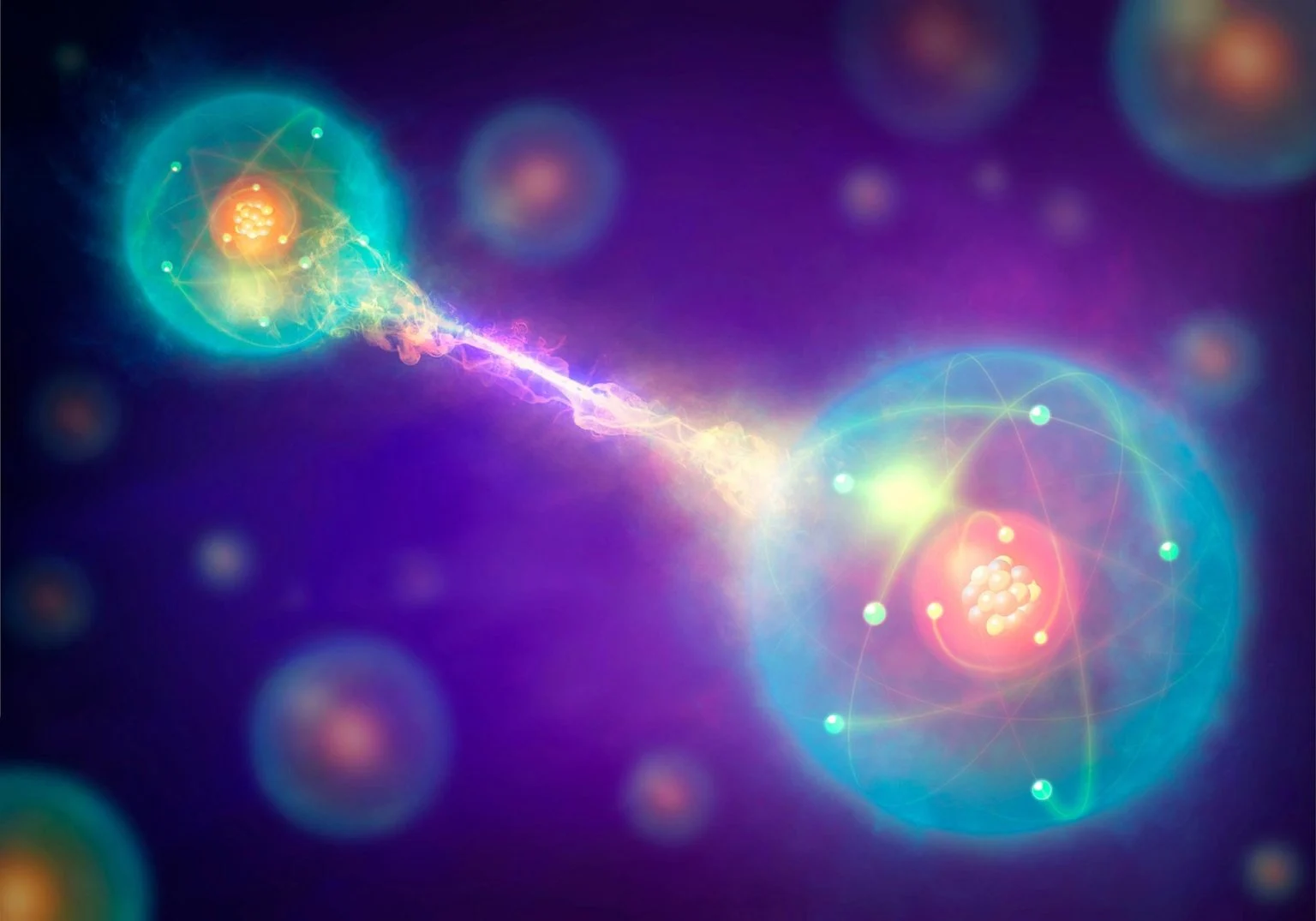
"In a large quantum system comprising many interconnected parts, one can think about entanglement as the amount of quantum information shared between a given subsystem of qubits (represented as spheres with arrows) and the rest of the larger system. The entanglement within a quantum system can be categorized as area-law or volume-law based on how this shared information scales with the geometry of subsystems, as illustrated here. Credit: Eli Krantz, Krantz NanoArt" (ScitechDaily, How MIT Is Redefining Quantum Computing With New Entanglement Control)


A key element in quantum computing is how to drive information into particles, which the system should put into superposition and entanglement. The quantum computer is useless if it cannot drive information into those particles. 

The new way to make the quantum entanglement makes it possible for the quantum systems can interconnect qubits in the 3D structures. The system is a network where the system can maintain quantum entanglement for a longer time than before. 

The system uses technology where the receiving participants in quantum entanglement can push information into another particle before quantum entanglement reaches the same energy level. If the system can create a structure where quantum entanglement can jump between quantum dots, that thing is the biggest breakthrough in quantum technology. 


https://scitechdaily.com/how-mit-is-redefining-quantum-computing-with-new-entanglement-control/


https://scitechdaily.com/over-1000-qubits-achieved-physicists-set-world-record-for-atom-based-quantum-computers/


https://scitechdaily.com/revolutionizing-photonics-2d-materials-manipulate-light-with-remarkable-precision/

Sunday, May 5, 2024

Can ultralight primordial black holes exist all around the universe?


"The simulated image shows how black holes bend a starry background and capture light, producing black hole silhouettes" (Interesting engineering, Ultralight, undying black holes could be all around the Universe)


The term: "ultralight black holes" consists of planetary mass black holes, atom, and quantum size black holes. The "Kugelblitz" black holes can be very light. "Kugelblitz"- black holes form straight from radiation. In certain situations, the FRB or some other energy burst that impacts the planet's atmosphere can press the planet so dense, that it turns into a black hole. 

Theoretically, also atoms and all other particles can turn into a black hole if they impact with an energy load that is high enough. In those cases, energy impulses press the atom's quantum fields symmetrically, and that energy pushes all particles in the atoms into one entirety. 

Can ultralight or quantum-size black holes be undying? The black hole is like a bubble in a gravity field. The interaction at the edge of a black hole is that the material disk pumps energy to the black hole. A black hole's gravity field is so powerful that it pulls wave movement inside it, and in the material disk, the electromagnetic radiation interacts with the material forming intensive heat. The question is, does the black hole pull gravity waves in it? 

The event horizon is a standing gravity wave or gravity field, and that should deny the gravitation itself falling in the black hole. Gravitation is an energy form or wave movement with a certain wavelength. The gravity field around black holes is a very powerful thing. Energy always travels into the lower energy space. 

That means the outcoming gravity waves cannot fall into the black hole. The reason for that is, the stronger gravity field pushes the outcoming gravity wave back. This means that the dense gravity field forms a situation in which all other wave movement falls in that bubble called a black hole, except gravitational waves.  

But gravitational waves can start to orbit a black hole. Those orbiting gravitational waves lock the gravitational field around the black hole. That gravitational ring also sends gravitational waves into the black hole. The material that orbits black holes is in a very high energy level. The kinetic energy of that material is massive. When material travels through quantum fields those fields increase the mass of that material. 

Sometimes a black hole pulls all material from its environment inside it. That separates the black hole from the material. And in that case, the energy field around it turns weaker. At that point, the black hole sends gravity waves.  So can the atom-size or smaller black hole be stable? 

Could the material and radiation called wave movement lock the gravitational field in that structure? The thing that denies the expansion of the black hole is the energy stability. The black hole can expand only if it gets more energy than it releases. In the form of gravity waves. It's possible. A small black hole forms the wave movement layer that locks the black hole in its form. 

If the energy level of that layer is high enough that forms a shell that doesn't allow energy and material to fall in the black hole. That wave movement shell can also lock gravity waves that the black hole sends inside it. This is one model that can turn very small and light black holes into stable ones. 


https://interestingengineering.com/space/ultralight-primordial-black-holes-universe

Thursday, May 2, 2024

What if the theoretical wormhole doesn't end suddenly?


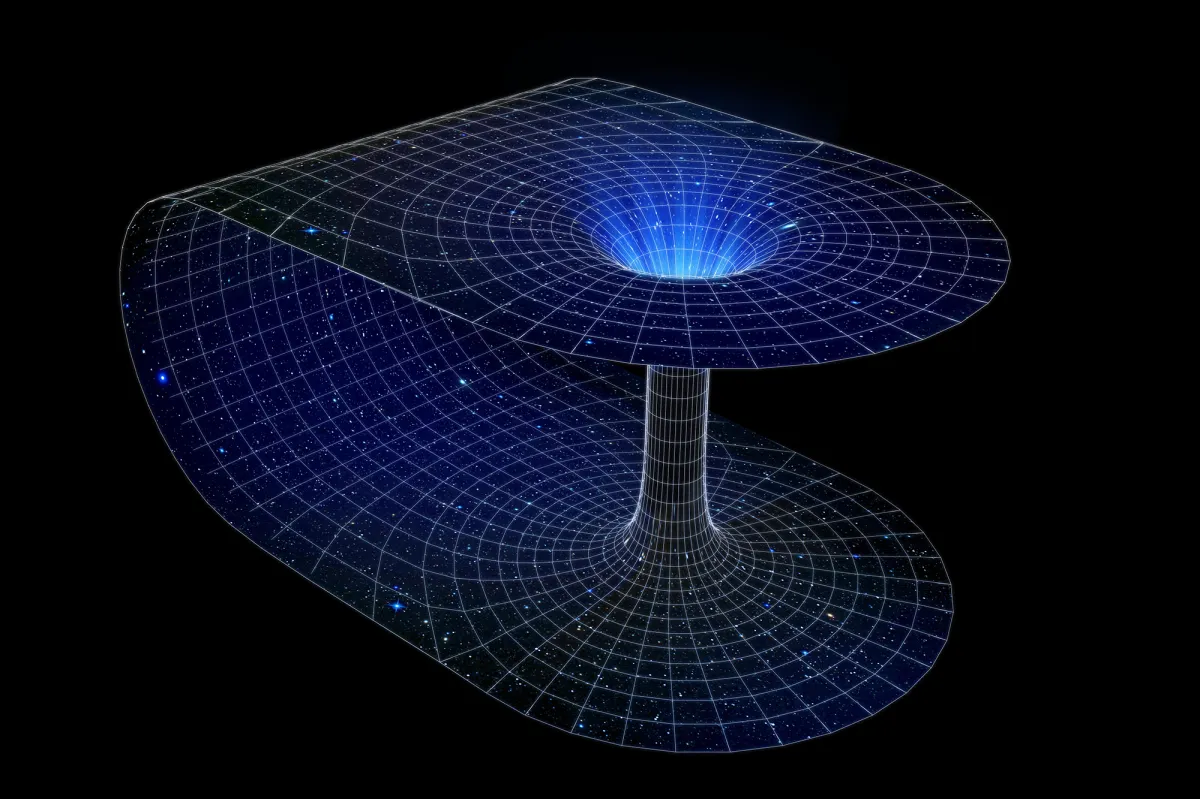
The Einstein-Rose bridge or the wormhole ends in the white hole, the point where material and energy are. In simpler saying, information comes out from the wormhole. The regular model of the white hole is the theoretical phenomenon that a white hole is the opposite effect of a black hole. 

In that model, the white hole is a sudden phenomenon, the energy and material that come from the gravitational tunnel. The evidence against that model is introduced, that the white hole is not confirmed. 

When we think of the possibility that material crushes when it comes out from the white hole, the idea is that the energy and time are locked in the particle. And when it comes out, the energy travels out from it so fast, that it rips particles in pieces. Time is energy, and the universe's expansion causes a situation in which the energy level in it drops. 

In theories. The white hole is like a lamp or some kind of point, where material and energy come out from the point that pushes everything out from that tunnel. The white hole pushes everything away from it. But what if the white hole divergents gradually? In that model, the wormhole will erupt in stages. 

And we must realize, that it's possible, that the white hole is not a suddenly starting phenomenon. The wormhole is like a gravitational tornado that travels in the universe. The gravitational tornado closes material and wave movement inside it. And the outside radiation pushes that tornado that acts like a laser. The energy that comes from the sides locks the energy in the object. And the backward-coming information pushes objects forward. 

And if the wormhole is like a tornado the white hole doesn't begin suddenly. The gravity strings that form wormholes will erupt or lose their density like the whorl that the child draws or some kind of serpentine. That means the wormhole doesn't end suddenly. The gravitational whirl or tornado will turn less dense. And that means the white hole begins in stages. The wormhole will expand and then the outside quantum fields can travel in that thing. 


"Researchers at the University of Amsterdam have applied a 40-year-old mathematical framework by Jean Écalle to effectively describe and unify quantum mechanical tunneling phenomena. Credit: SciTechDaily.com" (ScitechDaily, Quantum Tunneling Explained With 40-Year-Old Mathematical Discovery)


Quantum tunneling can explain wormholes. 

When particle or wave movement impacts to the potential wall and travels in it. That potential wall starts to pump energy to that particle. In this process, the potential wall pulls more energy into the particle than it otherwise gets. And that causes the effect, that looks like crossing the speed of light. 

The wormhole is the quantum tunnel through space and time. And it's quantum tunneling through space and time. Because a wormhole locks energy in the particle it cannot get older. In a wormhole, a particle can increase its speed faster than in other ways because in that structure is the maser phenomenon. The outside energy travels through the gravitational tornado, forming the string that pumps energy to the particle. The particle will not separate from the quantum fields. 

The wormhole will lock energy in the particle. And that phenomenon can explain things like dark matter, dark energy, and the cosmic web. The energy vacuum in the wormhole makes it possible for the particle can travel faster than the speed of light. Another way we can say that the particle travels faster than usual. The thing is that in a wormhole photon speed is higher than outside it.


https://nypost.com/2020/08/31/wormholes-move-humans-through-space-and-time-could-be-possible-study-says/

https://scitechdaily.com/quantum-tunneling-explained-with-40-year-old-mathematical-discovery/


https://en.wikipedia.org/wiki/Quantum_tunnelling


https://en.wikipedia.org/wiki/White_hole


https://en.wikipedia.org/wiki/Wormhole


Satellites and lasers can improve data security worldwide. But they can be used as intelligent surveillance systems.


The NASA solar sail called home from a distance. 


The solar sails are the tools that can travel between planets using the solar wind as a thruster. The same technology that is used in solar sail structures can used as the large-size radar, and radio telescope systems. That researchers can send to space. 

The solar sails can connected. And then those systems can rotate around the central point. That allows to creation of a large-size scanning radio interferometer. Another thing is that solar-sail technology allows to creation of large-size radar or ELINT satellites that can pull their antennas in the structure. 

The solar-sail technology can make it possible to create a communication satellite, that can have active or passive modes. The system can aim radio masers at that structure that can reflect it to the right position. In that model, the solar sail acts like an Echo satellite. But it can also have active mode, where it acts like a receiver transmitter. The large-size mylar structures can also have optical reflectors that allow to aim of high-power laser rays to the targets. 

This kind of system is one version of anti-satellite (ASAT) weapons. The ground-based lasers shoot laser rays at those mirrors that aim the laser rays into the satellites below them. This idea is sometimes debunked because the atmosphere absorbs laser light. But it is possible that using highly advanced acoustic technology the acoustic systems that base phonons can drill holes in the atmosphere, and laser rays can travel through that hole. 

Satellites can improve data security in many ways. The system can cut the data flow into pieces, that it sends through different channels. The system can use many data lines. Like cables, different satellites, and other kinds of things to cut the data flow into pieces. 

The use of different frequencies makes it hard to break the radio communication, especially, if the system cuts information into pieces, that it sends at the same time. Using the different frequencies. The system can also use optical and radio communication. The system shares data between radio and optical frequencies. 


Lasers are multipurpose tools. 


The lasers can make traditional eavesdropping methods ineffective. In the most secured forms, the laser systems can use hollow laser rays where the outer laser ray covers the signal-transmitting ray. That thing makes it impossible to see signals from outside. That thing makes it possible to create a communication line, that is secured. Another thing is that laser rays can used in lidar systems, mass spectrometers, and weapons.  

The laser vaporizes material in mass spectrometers. Then it can analyze its spectrum. The power of laser weapons is the only thing that differentiates them from mass spectrometers. The laser can act as a directed energy weapon. Or it can aim another weapon at the target. 

The same laser ray can used to transmit data and aim weapons to target. In modern laser aiming systems. The image-recognition system detects the target, and then the laser just flashes less than a second, marking the image that the weapon should hit. 

The laser system highlights the wanted target and gives pinpoint accuracy to the inertial, Imaging infrared (IIR) weapons. When laser marks the target the camera in the weapon takes an image of the target, and then the IIR system aims the weapon into it. Or maybe quite soon, the laser weapon and communication systems can connected. The strength of the laser determines its purpose. The same system can used in multiple missions by adjusting its power. 


https://scitechdaily.com/data-from-the-void-nasa-receives-laser-communications-from-140-million-miles-away/


https://scitechdaily.com/electro-optical-innovation-new-way-to-control-and-manipulate-optical-signals-developed/


https://scitechdaily.com/harnessing-sunbeams-for-space-travel-nasas-solar-sail-mission-successfully-phones-home/


https://scitechdaily.com/space-age-security-how-satellites-could-extend-quantum-encryption-globally/


https://learningmachines9.wordpress.com/2024/05/02/satellites-and-lasers-can-improve-data-security-worldwide-but-they-can-be-used-as-intelligent-surveillance-systems/

Wednesday, May 1, 2024

The ability to measure differences in energy levels makes it possible. That computer can store data in that system.


"Physicists have successfully identified and manipulated a specific thorium atomic nucleus state using a laser. This discovery enables the merging of classical quantum physics and nuclear physics, promising advancements in precision measurement technologies and fundamental physics, including the potential development of a nuclear clock surpassing current atomic clocks in accuracy. A laser beam hits thorium nuclei, embedded in a crystal. Credit: TU Wien" (ScitechDaily, Decades in the Making: Laser Excites Atomic Nucleus in Groundbreaking Discovery)


During a groundbreaking study, researchers manipulated a single thorium atom's nucleus. The ability to manipulate atoms and their nucleus allows the system to store data in those atoms. 

If the system can have the ability to store and transmit data between atoms and in their electrons can used in the next-generation quantum processor. The ability to write and read data into atoms requires. The system can measure differences in the energy levels in those particles.

If the system can turn two opposite atoms into a quantum computer. It requires the ability to store data in the atom's nucleus. The system can make superpositions and entanglements between electrons that orbit the atom's nucleus in the 2D layer. 


"Researchers have demonstrated how to manipulate light at nanoscale using photonic crystals, simulating the effects of magnetic fields on electrons. This breakthrough in photon manipulation can significantly impact the development of nanophotonic chips, improving devices like lasers and quantum light sources. (Artist’s concept.) Credit: SciTechDaily.com" (ScitechDaily, Photons Frozen in Time by Innovative Crystal Designs)

When we think of the quantum computer it's possible to create a system that looks like a CCD camera. The number of activated photoelectric points determines the qubit's state. The next-generation mass memories can store information in quantum dots. The multiferroic nanodots can act as data storage. 

The system can look like a chessboard or QR code, and the data that the system stores into those dots. Can be driven into the quantum computer in the quantum state. The system can share data to quantum states using those dots. 

"Researchers at the Tokyo Institute of Technology have made significant advancements in memory technology using multiferroic materials, specifically BFCO nanodots. These materials enable more energy-efficient data writing using electric fields and non-destructive reading through magnetic fields. Credit: SciTechDaily.com" (ScitechDaily, Revolutionizing Memory Tech: The Rise of Low-Power Multiferroic Nanodots)


When those quantum dots are opposite to each other. That thing makes it possible to transport data between those quantum dots in their entirety. The system shares information between those quantum dots. 

And then it just transports all information as an entirety. When we think of the system that should recover or collect data from the hard disks, the system must only measure differences in the voltage on the surface of that hard disk. Then operating. The system transforms those differences in voltage level into ones and zeros. 

More accurate systems that react with different voltage levels can determine the qubit's state. We can think that the qubit is like an onion and the system transports data from A to B it just sends one layer from sender (A) to receiver (B). 


The new groundbreaking crystal freezes photons in time.  


What would you do with frozen photons? Those photons can store data in the photonic form. In that case, the quantum system data can transfer data into those photons. And then the system can put them into the superposition and entanglement. Those frozen photons can also used to measure things like gravity waves. When gravity waves hit those photons, that affects their annealing or their energy level. 

That makes it possible to create a system, that can revolutionize the measurement. When some system transports information from the system, it simply measures the differences in the energy levels of the data tool. When the system can see those changes in the chemical or quantum field structure, that thing makes it possible to drive data between mass memory and the processor or qubit. 


https://scitechdaily.com/decades-in-the-making-laser-excites-atomic-nucleus-in-groundbreaking-discovery/


https://scitechdaily.com/photons-frozen-in-time-by-innovative-crystal-designs/


https://scitechdaily.com/revolutionizing-memory-tech-the-rise-of-low-power-multiferroic-nanodots/

New technology makes dark matter visible.


"Galaxy cluster, left, with ring of dark matter visible, right. Credit: NASA, ESA, M. J. Jee and H. Ford (Johns Hopkins University)"  (ScitechDaily, Turning Invisible Dark Matter Into Visible Light)

"Explorations in dark matter are advancing with new experimental techniques designed to detect axions, leveraging advanced technology and interdisciplinary collaboration to uncover the secrets of this elusive component of the cosmos." (ScitechDaily, Turning Invisible Dark Matter Into Visible Light)


Dark matter interacts with visible material through gravity. That gravitational interaction causes a situation in which photons travel differently than they should. The image above this text introduces a dark matter halo around the galaxy. That halo means. That there is some kind of ring of dark matter around the galaxy. When a photon leaves a galaxy the dark matter pulls it from ahead. And the galaxy pulls it backward. This thing causes an effect the photon acts differently as it should. 

When we think about galaxies there is no dark matter, the centripetal force may destroy fast-spinning dark matter clouds. When the dark matter cloud starts to travel too fast centripetal force can pull it outwards. In that case, the dark matter forms a donut-shaped structure around the galaxy. That means the galaxy itself doesn't involve dark matter. The dark matter halos around galaxies cause interaction where that dark matter pulls the galaxy outside.

Gravitational interaction means that black holes pull dark matter in them. As they pull other materials and wave movement. The form of dark matter is a mystery. But the Weakly interacting massive particle (WIMP) acts like all other particles. It can form a cloud that pulls material to it. There is the possibility that WIMP can form structures that are planets. The WIMP can form things like black holes. But the shape of that particle is a mystery. 


WIMP and theorem of the quasiparticles. 


WIMP could be an exciton-type quasiparticle. The exciton forms when one electron loses its energy. That forms the electron hole. Then another electron locks that hole when it starts to orbit it. The stable exciton is one of the biggest theorems in the world. If the electron hole in the exciton is deep enough it can form "Quasimateria". 

That theoretical "quasimaterial" or quasiparticle glimp is like an electron shell there is no atom's core inside it. If that kind of particle where is only electron shells are possible, that thing can look like "real material", but it loses its existence when radiation fills that electron hole.  

What if the WIMP is the case, where the superstring or photons orbit some particle? That makes those elementary particles look like Saturn. 

There is the possibility that WIMP is the case where the superstring orbits some subatomic particle. If the superstring or photon starts to orbit another particle like a gluon, it can deny that particle's interaction. 

Quasiparticles like excitons cause an idea that it's possible, that the particle can come across the dimensional limit. Things like 2nd. and 4th. dimensions are energy levels where material loses its ability to interact with 3d material. In regular models, the particle cannot cross the dimensional limit because, at that point, its energy level turns into the same as its environment. If a particle's energy level is the same as its environment it loses its existence as a particle. 

If a particle visits outside the universe, its energy level can turn lower than zero Kelvin. But in the universe is impossible to go below that zero Kelvin (0K) degrees which is the energy minimum or absolute zero point. 


The highly accurate system can adjust the particle's energy level as stages. That allows the material to cross the limits of the dimensions. When material jumps to the 4 th. dimension its energy level rises so high, that it cannot interact with 3D particles. And when the particle jumps into the 2nd. dimension, its energy level turns lower than the energy minimum in the universe. 

The 0 Kelvin (-273,15 C) is the absolute energy minimum in the universe. To make the particle's temperature turn lower than zero kelvin we should find the place where temperature is lower than zero kelvin. And that place is outside the universe. We cannot see material that is outside the universe because it's colder than the universe. And energy travels away from the universe because it always travels to lower energy levels. 

The reflection from that material cannot reach us if its temperature is lower than the universe's temperature. The universe's temperature is not zero Kelvin. It's three kelvin. Because energy travels always to the lower energy areas we are hard to see those particles. 

The vacuum energy doesn't mean that the vacuum creates energy. It just moves or condenses energy around the lower energy point. 

If some particle comes from outside the universe it starts to pull quantum fields to it. That can be the source of dark energy. The term vacuum or zero point energy means a situation that which there is some kind of lower energy area in the quantum field. That lower energy area puts quantum fields in it because energy always travels to the lower energy area. 

The vacuum energy doesn't mean that the vacuum forms energy. It just puts energy into travel. Or otherways saying, the lower energy area in the quantum field makes energy flow. And the depth of that hole determines how fast energy travels. A black hole is the ultimate version of dark energy. When the back hole pulls wave movement inside it, that energy flow puts energy through the stars around them. And that puts the star's energy level higher than it should. 

If a particle visits outside the universe it can decrease its temperature lower than the temperature in the universe. If a particle travels back from outside the universe it starts to pull quantum fields against it. When quantum fields touch that particle they form the standing wave. And then that thing can reflect from the particle. This thing causes an effect called zero-point energy. The dark energy may form when some particle comes out from the universe. 

The particle cannot jump to the 2nd. dimension in the universe. When it reaches energy minimum it loses its existence. The existence of material means that the material's energy level is different than its environment. So if a particle travels out from the universe, where the energy minimum is lower than it is in the universe. That causes a situation in which the particle's energy level can turn lower than the energy minimum in the universe. 

The article is like a whisk-looking structure. That whisk is locked superstrings. The internal energy pushes those superstrings out. And the outcoming energy pushes those superstrings in. When a particle's energy level turns into the same as its environment the quantum field travels between those superstrings. And that breaks the structure immediately. Same way if a particle's internal energy level turns too high, that wave movement that travels from inside to out breaks the structure. 

But if some other particle protects the particle that comes down from the fourth dimensional energy level. That thing can make the situation that the other particle like a photon cloud can keep the particle's energy level different than its environment. The idea is that the energy level on the particle is not homogenous. And there are some lower and higher energy levels even on the smallest particle's quantum fields. 

Those lower energy areas are like potholes. And energy falls to them. Then in the middle of those potholes, those waves connect forming the standing wave and reflection, which causes quakes in those quantum fields. Also between those superstrings standing waves form reflection that pushes superstrings away from each other. In that case, the internal quantum field erupts from those holes. When the universe expands, the outside quantum field turns weaker. Those things cause the material to turn into wave movement. 

So the system can raise or decrease the particle's energy level partially, which means the particle's energy level turns in stages. 

In some other models, the system can pull another quantum field or whisk-looking superstring structure over the particle. Then another particle will protect the particle inside it. And the outside system can input energy through that outside particle. If that two-layer particle is possible to create that is a big step for material research. 


Excitons and electron beams. 


Excitons can used to keep the electron beam in the form. That means lower energy electrons or holes pull other electrons to them. Excitons can make it possible to make an extremely highly accurate electron beam where there are no protons. That thing can make it possible to create new ways to transport information through the air. 

Excitons or electron holes can used to aim other electrons precisely in the right direction. In quantum computers is possible that the data is stored in the excitons. The lower energy particle involves data. And another electron locks that hole in a stable form. When that computer transmits data from that hole to another particle it raises its energy level to the level that is higher than the receiver. 


https://scitechdaily.com/turning-invisible-dark-matter-into-visible-light/

Green stars and strange binary stars. And post-stellar planets.

“Artist’s impression of ZTF J0440+2325, a brown dwarf (right) and a red dwarf (left) that orbit each other every 86.65 minutes. The brown dw...