Tuesday, July 18, 2023

Well, is the Universe 26,7 or 13,6 billion years old?


The age of the universe is hard to detect. We can see the last flash of the Big Bang. And we can see the moment when radiation started to form material. But we cannot see the Big Bang itself. Many things remain unknown. The normal model of the Big Bang was that the effect, or "the bang," was stable. That means the Big Bang released material and energy into the universe. Or the Big Bang released energy that turned into material in space. When we observe the Big Bang using cosmological models, we are observing it from outside. 

We cannot see time dilation or energy relationships, and actually, we don't know if the Big Bang happened at the same speed all the time. There is a possibility that there were changes in the speed at which the Big Bang released energy. And if we think that we cannot see the entire Big Bang and only the last flash of that, we are not sure how long the Big Bang remained. Or how long it released energy until the first particles were formed. So we might think that the moment when the quark-gluon plasma formed was the moment when the universe formed. That point is 13.8 billion years in the past. But there is a possibility that electromagnetic radiation existed a long time before that.


When scientists calculate the age of the universe, there is always some kind of error. The problem is that things like time dilation in a young universe make it possible for the universe to look older than it is. But the problem is that the universe was different in its youth. Time dilation, energy level, and form of material were different. So we are not sure which age is right.

When we are looking at an image of the universe, we might see that galaxies are on a layer that looks like a ball. The reason we don't know the geometric shape of the universe is that we don't know how much dark matter there is. Another interesting thing is that there is some kind of effect that makes whirls in that layer, where almost all galaxies are.

There is a supermassive black hole, and then that thing makes a galaxy around it. There is a small possibility that the shockwave that left the Big Bang impacted some other wave movements. But that requires the existence of another universe. Or there is some kind of energy peak that is making those whirls.


In some models, dark matter is released into the universe in some other event than the Big Bang. The hypothetical effect that released dark matter is called the "Dark Big Bang.". 


The standard cosmological model is that the Big Bang released all particles. But the fact is that nobody is sure about that thing. Dark matter, along with dark energy, can exist before the visible material. And nobody is sure if dark matter and dark energy have any kind of connection with each other. But when we are trying to determine the age of the universe, we must realize that we must find the point where we begin our calculation.

The point could be the point where the high-energy universe started to take on the form in which we know it. That point would be the point where the first gluons or quarks formed. The idea is that particles form from the inside to the outside of atoms.

And in that model, the gluon would be the first particle of visible matter. The problem with all models is that we don't know the conditions in the young universe. We know that time dilation was stronger. The energy level was higher, and then the first plasma formed. The energy turned into gluons and quarks. The difference between quark-gluon plasma at CERN and in a young universe is that in a young universe, the quark-gluon plasma stands alone. There were no outside effects in that universe.

But quark-gluon plasma requires that there be quarks and gluons. Time dilation is a problematic thing in the calculations of the age of the universe. Time moves faster in our universe. The dark energy effect is stronger now than in an extremely young universe. In the universe, where there were no particles and impacting waves formed the first particles, there was no gravitation. Or gravitation was different than our universe. If there were WIMPs before the first visible matter particles, there was some kind of gravitational effect from WIMPs.

There is a possibility that there was no internal gravitational interaction before the first particles formed. There was something that created things like black holes in the young universe because wave movement formed material in the Schwinger effect that required the ability to change its direction. There must be something that made waves cross each other.


https://bigthink.com/starts-with-a-bang/universe-13-8-or-26-7-billion-years/

Monday, July 17, 2023

The dark energy and antigravitation

Graviton and antigravitation: is dark energy antigravitation?


Mass and gravitation have a connection. Mass is the thing that determines an object's gravitational force. And Higgs field should give mass to objects. So Higgs field could be the thing that connects WIMPs, hypothetical dark-matter particles, gravitation, and visible material. The thing that supports this model is that dividing particles from Higgs boson includes W and Z bosons. And the interaction between Dark matter and WIMPs should contain weak interaction or weak force. So that means the WIMP might interact as well with gravitation. But also with Higgs field. 

Gravitation is a mystery, but gravitational waves, which are the newest tool in physics, are uncovering the mystery of that most dominant force in the universe. In this text, the graviton is the particle that forms and transmits gravitation. So if the vaporization of that particle forms gravitation, the antigravitation would be the quantum radiation, or "vapor", from that object. Or it can be emission radiation that the graviton sends when gravitational radiation stresses it.

The source of gravitational waves is a very small particle. And if we think that gravitation is radiation, its wavelength is very short. So if a graviton is a particle that is between gluon and quark and it sends gravitational radiation, the antigravitation would be the emission radiation from those particles.

So could gravity be the same thing as the Higgs boson? The Higgs boson is the thing that gives mass to particles. And there is the possibility that the Higgs boson is at least very close to the mythic graviton. We see the Higgs boson when it is shot out of matter, and we see that particle only when it flashes just before energy travels out from it.

So if the particle that is between quark and gluon or inside all elementary particles is the reason for gravitation, that thing happens like this: When those particles are vaporizing or turning into electromagnetic waves, they form an electromagnetic low-pressure around them. That low electromagnetic pressure pulls particles toward each other. When that particle between them vaporizes, it turns smaller and compresses an entire atom or some other object. That thing causes the electromagnetic low pressure that we see as gravitation.


That explains why neutron stars, hypothetical quark stars, and black holes have such strong gravity fields. In those objects, the material is in homogenous form, and all particles, like gravitons, have the same size. So they vaporize simultaneously. In that model, all particles that are forming gravitation are vaporizing at the same time.

Sometimes researchers introduce the idea that dark energy is antigravitation. If we think that vaporizing the Higgs boson or some other yet unknown particle that vaporizes between gluon and quark is the thing that is behind the gravitational effect. We must say that proving that thing is extremely difficult. The particle that is smaller than gluon sends radiation whose wavelength is so short that it's hard to detect.

The reason why small particles send radiation or wave movement with such a short wavelength is that they send it more often than large particles. Small particles transmit energy more often than large particles because there is no room for extra energy. When radiation with a short wavelength impacts other particles, it causes smaller changes in the energy level of that larger particle than radiation with a long wavelength.

Emission radiation is wave movement that comes out of a particle when it releases its extra energy. And the thing that destroys material is the end of the stressing radiation. At that moment, the particle sends its extra energy out. The source of gravitation is something very small. And gravitation is very short-wave radiation. So if we think that the mass of particles and objects forms when some particles between gluons and quarks are vaporizing, the energy that this hypothetical particle sends is antigravity.

The fact is that gravitation, or gravity, is the force that has a long-range effect. And another thing is that. Gravitation is the force that affects large material masses or large groups of particles. The third thing is that gravitation doesn't transfer energy to particles. That means gravitation is a so-called "cold force".

Things like quantum gravity are interesting phenomena because they are the smallest elements of gravitation, and maybe if we can see that phenomenon, we can see antigravitation. The problem is how to confirm the existence of antigravitation. Gravitation is such a weak force, or its wavelength is so short, that other forces are covering it at the subatomic level.


https://en.wikipedia.org/wiki/Weakly_interacting_massive_particle

https://en.wikipedia.org/wiki/Higgs_boson


https://scitechdaily.com/on-the-trail-of-a-mysterious-force-in-space-scientists-shed-new-light-on-dark-energy/

Why are black holes losing their mass?


The fact is that gravitational waves have some role in that process. Whenever a black hole sends gravitational waves it sends mass or energy out of it. The fact is that. The mass loss of black holes means that there is less material and wave motion in the modern universe than in the past. Black holes cannot get enough material and wave movement to replace the energy that they lose all the time. Black holes travel out energy because their energy levels are higher than the environment's. Energy travels out of black holes. 

Loss of mass means that energy and material that fall in black holes cannot reach the singularity. So the singularity or material in the black holes is like in the bubble. Extreme high-energy radiation would pass into the middle of a black hole. But maybe, the very fast rotation or spin of the black hole's material causes an effect that the singularity is like in the electromagnetic bubble. That means the black hole's singularity or material is based on an electromagnetic vacuum. And the wave movement or quantum movement moves out of the singularity. It travels through an electromagnetic vacuum. That thing causes energy waves that travel out of the black hole's nucleus. And those energy waves are called gravitational waves. 

The fact is that hypothetical antigravitation doesn't need in advanced spacecraft. The standing gravitational wave in the direction where the craft is is enough to transfer the hypothetical craft. The idea is that stationary gravitational waves pull the craft that is behind it. For that system to work perfectly, synthetic gravitational waves are needed. And that means this system could be in use in the very distant future. 


Would it be possible for black holes to change material to WIMPs?


There is one problem with that model. That requires changing interactions between particles. The hypothesis is that visible material can turn into WIMPs in black hole poles. Or maybe that thing is possible in the extremely high-energy areas between the event horizon and the material disk. The needed change in the interaction between particles would happen in massive gravitational fields where gravitation locks all particles in the same position. There is a possibility that massive gravitational fields along with very high energy levels can turn visible material into WIMPs. It requires a high energy level and a massive gravitational field that locks particles in a specific direction to be able to accomplish that. 

So what if the material falls into the black hole and turns into WIMPs? The fact is that dark matter has only one known interaction between visible materials. That interaction is the gravitational interaction. So if material or part of material falls into the black hole and suddenly turns to dark matter that thing causes a situation where lots of material loses its ability to another type of interaction than gravitational interaction. That thing means lots of electromagnetic energy is lost from the transition disk. 

Sunday, July 16, 2023

Einstein's gravitational model and Theory of Relativity still stand strong.


The fast shrinking of a black hole is what causes its strong gravitational field.


All black holes are losing their mass. When black hole masses decrease, they shrink. And that shrinking causes low electromagnetic or quantum pressure around that vaporizing object. Vaporization means that an object turns into an electromagnetic wave. And then other quantum fields are trying to fill that area that the shrinking black hole leaves behind it. The fast shrinking of a black hole is what causes its strong gravitational field.

A black hole, or its event horizon, is a ball-shaped gravitational lens. That thing focuses all radiation, including gravitation, in the middle of it. And if that is true, Gravitational waves are reflections from the center of the black hole. If we think that the Higgs boson is the thing that gives mass to objects, we can use that model to explain why the gravitational field of a black hole is so powerful. If the radiation that decreases the mass of the black hole is coming from vaporizing Higgs bosons, that explains the power of the black hole's gravitational field. 

When a black hole vaporizes or loses its mass, there is an electromagnetic or quantum low pressure around it. All quantum fields are trying to fill that low pressure. And that flow is what we know as gravitation. Black holes are actually ordinary objects whose gravitational field is extremely strong. And if the vaporization of the black hole or decreasing of its size forms the gravitation, that model can be applied to all other gravitational centers, like planets. The reason why the gravitational field around planets is not as strong as around black holes is that their particle sizes decrease slower than in black holes.

A black hole or its event horizon is a ball-shaped gravitational lens. That thing focuses all radiation including gravitation in the middle of it. And if that is true. Gravitational waves are reflections from the center of the black hole.

What is a black hole? We can say that the black hole is the ball-shaped lens that focuses all radiation in the middle of it. And then that thing causes reflection from the center of the black hole. If the black hole also focuses gravitational radiation or gravitational wave movement, that explains the gravitational waves that are coming out of it. In that case, the gravitational waves are reflections from the center of the black hole.

When gravitational waves fall into the black hole, they collect around the singularity. The outgoing gravitational radiation turns that wave's energy level higher and higher until energy starts to travel out from the black hole. There is a possibility that a singularity that spins extremely fast also aims gravitational waves at its poles and sends gravitational peaks, gravitational tornadoes, or "wormholes" across the universe.

*****************************************************************


"Researchers have confirmed a fundamental assumption in physics with unprecedented accuracy — that the various properties of mass, such as weight, inertia, and gravitation, are always equivalent, regardless of the specific composition of the mass involved. This reinforces the equivalence principle, essential to Einstein’s theory of relativity, and addresses a critical point of divergence between classical and quantum physics." (ScitechDaily.com/Gravity Still Holds: Einstein’s Relativity Theory Stands Strong After Quantum Challenge)


Light cone in 2D space plus a time dimension.(Wikipedia/Light Cone): Does the gravitational focus turn the gravitational waves upside down to their mirror waves?


*****************************************************************

Can the event horizon turn gravitational waves upside down? And could that effect also happen in the focus of the other gravitational lenses? The idea is that the gravitational lens acts like an optical lens. There is a focus, and if we were looking at the image through the optical lens behind the focus, we would see the image upside down.

In some models, gravitation turns the other way inside the black hole. The idea is taken from the famous "light cone". The idea is this: When gravitational waves travel across the point where the gravitational field turns so strong that escalating velocity crosses the speed of light, that thing also affects gravitational waves and the form of gravitation. So if we think that the event horizon is a focus that unites gravitational waves like a lens unites light waves, the event horizon turns the gravitational waves upside down, just like the lens makes an image that is upside down if we are looking through it behind the focus.

The quantum challenge cannot shake Einstein's Theory of Relativity and its position in the world of science. The fact is that quantum theories are not yet complete because we cannot know the essence of matter. Without knowing the entire system, it is impossible to make models of it. The quantum systems are the entirety of wave movement and particles. Each fundamental force is the wave movement. And there is a distance where each force is dominant. A strong nuclear force is a force that has effects only over a short distance. That force is the interaction between gluons and quarks.

Gravitation is the weakest of all forces. But it interacts across long distances. The strong nuclear force can also travel long distances, but the wavelength is so short and the transmitting particle of that force is so small that there is no visible strong nuclear force interaction over long distances. So if there is some kind of long, strong nuclear force's distance interaction across protons and neutrons, we cannot see that interaction because the other three fundamental forces are coming from larger particles, and those nuclear forces' wave movement forms are easier to detect.

There is a possibility that the Higgs boson is normally between gluons and quarks. Or maybe that boson is inside each particle. Nobody knows if that particle is the Higgs boson or if there is some kind of other particle called "top" or "god". When those particles are vaporizing, that thing forms electromagnetic or quantum low pressure.

And the quantum fields around atoms are pushing them lighter. The reason for that is that the size of atoms and particles decreases. In the young universe, the size of particles was larger than it is now. The reason for that is cosmic inflation. The expansion of the universe causes the quantum fields around atoms and subatomic particles to weaken. And that causes an effect where energy travels out from particles.


https://scitechdaily.com/gravity-still-holds-einsteins-relativity-theory-stands-strong-after-quantum-challenge/?expand_article=1


The JWST telescope just found the first candidates for dark stars.

The thing is that we cannot see those dark matter objects straight. But the gravitational effect of dark matter objects causes interaction with gas and dust near those objects. That interaction means that gas and dust start to whirl. And that makes the friction in those particles. The same way the dark matter object interacts with stars. And if some planet's mass dark matter glimpse impacts with a star, that causes the rise of the star's energy level. The rising temperature uncovers the dark matter particles. But there is no other interaction between dark matter and visible matter than gravitation. So the heat of those stars will not affect dark matter glimpses. 


"A team of astrophysicists has discovered three potential “dark stars” using the James Webb Space Telescope. These theoretical bodies, thought to be powered by dark matter particles, are much larger and brighter than our sun. If confirmed, they could significantly illuminate our understanding of dark matter, one of the most significant unresolved issues in physics. Furthermore, their existence could reconcile the discrepancy between the current standard cosmology model and the observation of large galaxies early in the universe". (ScitechDaily.com/Powered by Dark Matter: Webb Space Telescope Catches Glimpse of Possible First-Ever “Dark Stars”)


The JWST telescope probably found the first evidence of a dark universe. If that is true, it makes a revolution into our worldview.


If the JWST telescope's observation about stars made of dark matter is right, That thing causes a sensation in science. That observation can open the road to analyzing weakly interacting massive particles (WIMPs). The existence of dark matter stars could explain why we cannot see the mysterious "Planet X".

The answer could be that hypothetical planet X or the ninth planet, is an object formed of dark matter. So if a glimpse of dark matter causes the gravitational anomalies in planet Neptune's trajectory, that opens a new page in science and material research.

If somewhere there is an object that is formed of dark matter, that object will pull material around it. But the mass of that dark matter planet or star is too low for the black hole. The planetary mass glimpse of dark matter could be sensational.


"The James Webb Space Telescope spotted three objects that may be formed from dark matter particles annihilating one another. (Image credit: NASA/ESA)" (Space.com/Do fabled 'dark stars' actually exist? James Webb Space Telescope spots 3 candidates)


The term "dark star" means a theoretical star that is formed of dark matter. That means those stars are forming weakly interacting massive particles (WIMPs). And if those dark stars are possible, that means that there could be dark planets, dark solar systems, and dark galaxies that we cannot see. It was a long time before I wrote an article about the theoretical dark universe. In that article, I wrote about the possibility that dark matter can form similar structures as visible material.

The idea for that theorem came from observations of galaxies where there was no dark matter. Because dark matter is not homogenous around the universe, it brought up the idea that maybe there are interplanetary nebulas, but why not galaxies, planets, and even species that live in a universe that is with us? But is invisible to us? 

Maybe the finding of the Webb telescope could confirm that theorem. And now it seems that there are at least some dark stellar-type objects in the universe that are formed of dark matter. Dark matter interacts with regular matter through gravitation. So if there is some invisible object that pulls matter around it, and if the mass of that object is too low for it to be a black hole, That means there is a possibility that the object is made of dark matter.

Theoretically, dark matter is a form of WIMP. The weakly interacting particles could be particles whose spin is too high. At that point, I mean that maybe the spin of that particle is over one. Or maybe the speed of the spin of WIMPs is extremely fast. That could form the onion-looking power field around that particle. The fast spin adds two energy peaks to the rotation axle of those particles. 

Those energy peaks will just pull energy that travels to the WIMP in two directions in extremely thin energy strings. When energy travels out from particles in those energy peaks, they pull energy or a quantum field with them. And that causes quantum underpressure around WIMPs. That means that other Qauntum fields are trying to fill that hole. If that model is true, it explains why WIMPs interact only through gravitation.


https://scitechdaily.com/powered-by-dark-matter-webb-space-telescope-catches-glimpse-of-possible-first-ever-dark-stars/


https://www.space.com/nasa-james-webb-space-telescope-stars-dark-matter


https://artificialintelligenceandindividuals.blogspot.com/2022/10/theoretically-dark-matter-can-form.html


Magnetohydrodynamic drive and pulsed plasma engines are one of the most promising engines in ships and interplanetary spacecraft.


DARPA is developing real-life Red October


DARPA is making history. That office is planning to develop an MHD (Magnetohydrodynamic) propulsion. The system is a tube where are magnets on both sides. The MHD drive pulls ions from the front of the system. And those ions will travel through that tube. The fact is that. If those magnets are powerful enough. They can pull water molecules through the acceleration tube. The MHD is a good choice for a submarine propulsion system. 


There are no moving parts in the system. And that makes it very low noise. In visions, the MHD is propulsion that is used in open seas. At harbors, the ship uses conventional propellers. 

Researchers are made some test units like Japanese Yamato 1 for testing that are used as test beds for early MHD concepts. The speed of Yamato 1 was about 8 knots. But it shows that MHD works. 


Yamato 1


After Yamato 1, Mitsubishi Heavy Industries made more test units that were faster than Yamoto 1. The main problem with those units was limited engine power and a lack of superconducting magnets. In the DARPA concept, the system uses nuclear propulsion and superconducting magnets. 

If there is a vacuum insulator around the reactor's cooling system that makes the submarine even more silent than if developers use the regular hulls.  Developers also can install the MHD system in catamarans and other surface ships. A vacuum insulator means that around the engine is the vacuum chamber that will decrease noise. 

The MHD drive with vacuum-isolated turbines, is one of the most powerful combinations in conventional ships. And especially ASW ships will get benefit from the low-noise options. 

And if it works fine, it could turn the next page for ship technology. In catamarans, the system pulls water between the hulls, and then those acceleration magnets drive water backward. There is also possible that an MHD drive can install in the conventional ship. 

The magnets that accelerate the ship are on both sides of the hull. Then ionized water flows impacting behind the ship, forming the wave that pushes the ship forward. 


Pulsed plasma engine. 


The MHD is also one possibility in spacecraft that travel between planets. When MHD is used in spacecraft, its name is MDD (Magnetodynamicdrive). In spaceborne MDD drive the system pulls ions from the stars through the acceleration tube. That kind of system can make weak thrust. But there is the possibility that the MDD system is connected with a pulsed plasma system.

The idea of pulsed plasma engines is simple. The system drives plasma plasma over the two polar magnets. The system emulates the plasma pulses that form when solar wind travels through Earth. So the image of forming of Earth's plasma pulse can also use to demonstrate how a pulsed plasma engine works.  

In Earth's magnetosphere ions and anions cross the north and south poles in opposite routes. Then behind the Earth, those plasma lines are connected. In crossing point plasma that is traveled lower impacts with those crossing plasma lines. That thing forms the bubble. That plasma bubble continues its growing until it can break through that plasma tail. The pulsed plasma engine can benefit the same plasma that comes from the sun. 

The system drives ions and anions from different routes. And then it makes a plasma pulse or plasma bubble behind the spacecraft. If the power of those accelerators is high enough, that system can create fusion behind the craft. And even if the fusion will not start the system can shoot electromagnetic radiation or anti-electrons to that plasma bubble. 


There is the possibility that at least lighter-than-air systems like extremely modern airships can also use pulsed plasma engines. The magnetic accelerators are pulling ionized gas over the shell of the craft. There could be two parallel lines. 

One is for ions and one is for anions. The system pulls those ion- and anion plasma over the shell of the craft, and then those impacting plasma lines form the plasma bubble behind the craft. The Airship can travel close to the edge of the space. And there it can operate by using the pulsed plasma engine. The effect of that engine can increase by using the sail where the plasma can send its energy waves. 

https://interestingengineering.com/innovation/darpa-real-silent-submarine


https://en.wikipedia.org/wiki/Pulsed_plasma_thruster


https://en.wikipedia.org/wiki/Magnetohydrodynamic_drive


https://en.wikipedia.org/wiki/Yamato_1


https://www.spacedaily.com/reports/Space_weather_will_delay_your_trains_999.html


Saturday, July 15, 2023

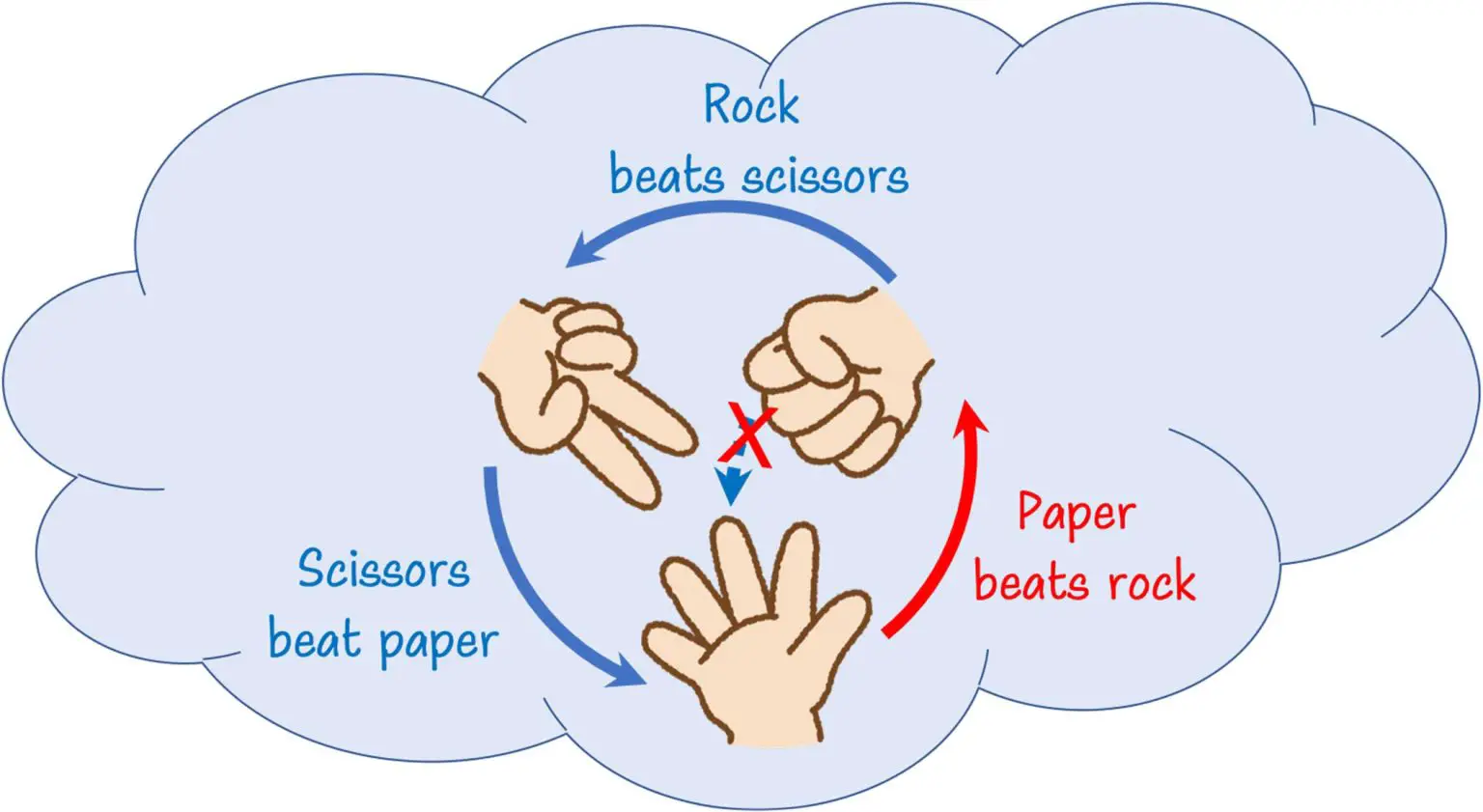
Paper, scissors, and rock can explain something about quantum mechanics.


The idea in this model is this there is something. That connects the material and another quantum state of matter and as we might say existence. There is some common thing in those three things. Scissors, paper, and rock are all solid. There are small pikes in their structure. 

And all of them are forming of similar particles. The thing is that scissors paper, and rock can destroy or break each other, but in that case. They should follow a certain order. Of course, we can throw rocks through papers, but that thing makes very ugly holes. 

Or if the paper is too close to the wall. That means rock will not break it. Scissors are sharper in that case, but rock destroys them. The thing is that paper can destroy rocks and scissors. The best way is to drill a hole in the rock and then put wet paper in that hole. Then the maker of that thing must just wait the cold night. 


Imagr The Hardy nonlocality can be interpreted as a rock-paper-scissors game: while rock beats scissors and scissors beat paper, it is impossible for the rock to beat the paper; instead, the paper beats the rock, which causes a paradox, i.e., nonlocality. Credit: Tohoku University

 In that case, freezing water will destroy the stone. The burning paper also can destroy things like scissors. If the temperature rises too high it melts the knife. The thing is that all reactions in nature have counter-reactions. And that means the system that is the information's origin can use to model the sender system.

The idea of the scissors, paper rock model is that some forces affect the force that is next to it. But otherwise, the force requires something from outside that can affect certain things. When force interacts with some other thing it requires two things. 

The first thing is that the key must fit the keyhole. That means the energy level in receiving system must be lower than the transmitting system. Energy always travels to lower energy areas. And that thing is one of the most important things that we must realize.


sources: https://scitechdaily.com/quantum-conundrum-exploring-stronger-nonlocality-with-rock-paper-scissors/?expand_article=1


Search for dark matter is one of the most difficult missions in history.


Researchers try to get information from dark matter by using the 21cm forest telescope. The thing is that the large area of that array is the thing, that researchers hope to make the interaction between the telescope and dark matter. The problem is that dark matter is a mystery. 

Nobody knows why it doesn't interact in other ways than by gravitation. There is the possibility that hypothetical WIMPs (Weakly Interacting Massive Particles) can interact with things like the Higgs field. But all information that researchers have about dark matter is hypothetical. The SKA (Square Kilometer Array) might give some new information about Dark Matter. And maybe that telescope can assist the SETI program and make large-scale scientific work. 


"Exploring dark matter and the first galaxies simultaneously with the 21-cm forest. This approach can help constrain dark matter properties and provide insights into the thermal history of the universe. Credit: NAOC & NEU" (ScitechDaily/Revolutionizing Cosmology: The 21-cm Forest Probe’s Role in Deciphering Dark Matter)


Above: Jupiter's auroras. Auroras are one kind of skyrmion. 


Skyrmions can use to detect dark matter. 


Skyrmions are donut-shaped power fields. The aurora ring that is around the magnetic poles of every planet and moon that have water one kind of skyrmion. That donut-shaped structure forms around the magnetic pike in the magnetic pole. All objects that have magnetic fields have this aurora ring around their poles. 

That thing means that skyrmions can also form around electromagnetic pikes and wormholes. The thing is that the skyrmion requires an axle that it can form around the magnetic channel. 

The skyrmion can also use to transfer information between photons and EM fields. A laser ray or some kind of electromagnetic pike that travels through skyrmion affects its brightness. And if the laser ray with the same frequency travels through the skyrmion ring, the brightness change in the skyrmion. The skyrmion acts like a lightning tube around a laser ray. 

And if the frequency of the radiation that Skyrmion sends is the same as the frequency of the laser ray, that thing can turn radio and microwaves to changes of brightness in the laser ray. 

This system is used in tests. That allowed researchers to make the quantum entanglement between photons and microwaves. The power of laser rays can increase by sending them through skyrmion. The thing requires that skyrmion is made in the same frequency with laser ray that travels through it. 


https://scitechdaily.com/revolutionizing-cosmology-the-21-cm-forest-probes-role-in-deciphering-dark-matter/?expand_article=1


Friday, July 14, 2023

What connects exoplanets and protective power field research?


There are many ways to make a protective energy field or protective field around the structure. The protective system can turn ion beams away. Using the same polar electromagnetic fields. The minus energy field would push ions away. But the problem is this. If the ion system shoots anions to that protective field it will pull ions into it. 

There are theoretical models of the systems that can create the EM-power field around the craft or other structures. The system must make symmetrical energy impacts around the structure. And one of the best candidates for that purpose is the graphene or fullerene ball. 

There could be ions or electrons trapped between those carbon atoms. And then the anti-electrons will impact those ions or electrons. The system might use nanotubes for aiming that radiation in a certain direction. Then that system sends electromagnetic impulses against incoming objects. 

In some visions, the cities are protected by using extremely high-power acoustic devices. The acoustic device makes the pressure wave that is harder than steel. And when that pressure wave hits incoming objects it can push them away from their course or even break their shell. 


***********************************************************************

"ESA’s Cheops mission has discovered an ultra-hot exoplanet, LTT9779 b, with an albedo (reflectivity) of 80%, making it the shiniest exoplanet ever found. These measurements exceeded those of Venus, which has an albedo of 75%, and Earth’s 30% albedo. The heightened reflectivity of LTT9779 b is due to its metallic cloud cover, primarily composed of silicate and metals like titanium." (ScitechDaily.com/Shiny Surprise: Cheops Discovers Scorching Hot Exoplanet Acting Like a Mirror)


***********************************************************************

Some experimental acoustic and electromagnetic systems can use to protect at least fixed platforms. They can also protect hovering helicopters and other slow systems. The fact is that if the acoustic wave rotates the aircraft or helicopter. Ahat wave denies the sound coming through that structure. And those acoustic waves can be ball-shaped forms around protected objects. 

In some visions, the acoustic systems make standing acoustic waves around the protected structures. The acoustic system can make the standing wave by impacting pressure waves. The structure itself sends the acoustic waves. And then quadcopters around it are sending counter waves. 

Then the system sprays small particles in that wave. Then those particles will put to orbit the structure. And that thing makes friction that heats the air. When some ammunition comes to that standing wave it breaks it immediately. The particles also protect the structure like standing craft or base against laser rays. 

The system can use carbon atoms to make extremely large fullerene balls. By using the standing wave as a platform. The large-size fullerene ball can protect structure against the incoming ammunition and meteorites. 


The extremely hot exoplanet acts like a mirror. 


The extremely hot exoplanet  LTT9779 b is like ultra-hot Neptune. Cheops probe detected that  LTT9779 b reflects 80% of incoming light. And that thing means that the exoplanet is like a fuzzy mirror. The regular mirror reflects about 90 % of light. And that thing makes the exoplanet  LTT9779 b look like a silver or aluminum balloon. There is suspicion that the aluminum-looking UFOs are some kind of protective field test. 

One version of the protective power field is the system that rotates two ion layers with opposite polarity in different directions. The other version of that system uses water molecules. That is anchored in that EM bubble. The bubble benefits water molecules and their polarity and puts them to orbit with the magnetic central axle. That thing forms an extremely hot bubble around the structure.

The system forms a heat zone that would destroy incoming bullets and ammunition before they reach the craft's physical shell. If we think that the power field also has 80% of reflection. 

That means it pulls 80% of the incoming energy beam in the visible light area. If there is some kind of dust in the power field that denies that the laser cannot reach the shell of the craft. 


https://scitechdaily.com/shiny-surprise-cheops-discovers-scorching-hot-exoplanet-acting-like-a-mirror/?expand_article=1

For the first time, researchers made an interaction between microwaves and optical photons.


The quantum entanglement between optical photons and microwaves can make a bigger revolution in quantum technology than we even imagine. 


The critical point in the data transfer between quantum systems and qubits is the point where electricity must turn into qubits. At that point, the system drives information from the electric system to photons. The quantum entanglement between optical photons and microwaves can solve that critical problem in quantum computing. And it can make a bigger revolution in quantum technology than we even imagine. 

In some models, the quantum computer is the silicon plate. The optical photons pump information to that silicon and the photovoltaic phenomenon makes information travel in the system. The system might base the 2D silicon structure that is connected with nano-springs to the graphene. 

The problem with this kind of system is how to drive information to the system and out of it. Making quantum entanglement between microwaves and optical photons could solve this problem. The problem with silicon-based quantum systems is how to drive information in that system. The system requires extremely high accuracy. The interaction between photons and silicon is one of the most promising things in how to transform information between optical and electric forms. The system requires laser rays with the same diameter as electrons. 

The weak and the most critical point in quantum computing is when the system transforms electric impulses into qubits. When the quantum system transfers information between electric systems and optical systems. The information must not change. So that makes the quantum entanglement between microwaves and optical photons so powerful tool. The quantum entanglement guarantees that the information that travels between optical and electric systems keeps its form. 

The answer could be the system that looks like a scanning tunneling microscope. The photons are created by changing the energy level of the hovering electron that hovers between the silicon layer and the extremely thin stylus. Then those photons would trap in the frame called a photonic crystal. And after that, the microwave would input data to those trapped photons, that will interact with silicon atoms. 

The next breakthrough in quantum technology is that researchers made an interaction between microwaves and optical photons. That interaction means that microwaves can exchange information between photons. And that thing makes at least fundamental advances in quantum computing and other kinds of quantum solutions. 

"Artistic rendering of the experimental device with the beam optical photons (red) entering and leaving the electro-optic crystal and resonating within its circular portion as well as the generated microwave photons (blue) leaving the device. Credit: Eli Krantz, Krantz NanoArt".(ScitechDaily, Quantum Breakthrough: First-Ever Entanglement of Microwave and Optical Photons)

The next step in quantum technology is the photonic brain. 


The quantum entanglement between photons and microwaves can use to transfer information to optical photons and backward. And that is the thing, that can make artificial neurons possible. In artificial neurons, the light cables act as axons. And every single glass fiber in that photonic brain is an axon. The idea is that the laser ray can transfer information to extremely small photovoltaic cells. And those photovoltaic cells turn optical information into electric mode. 

That allows to use regular miniature routers to route information in the photonic brain. Those routers receive information in the form of laser rays in photovoltaic cells. And then the miniature lasers resend that information to the right route. In those photonic brains, every single optical fiber is the independent state of the qubit. 

Radio- or microwaves could use to create qubits. The idea is every single independent frequency is one state of the qubit. So that thing makes the revolution in quantum computing. If things like drone swarms can make quantum computing entirety where each radio channel is a unique state of a qubit, that thing is a full-scale revolution in that kind of technology. 


The ability to exchange information between optical photons and other electromagnetic frequencies makes it possible that the intelligence system can steal information even from the quantum systems. 


The ability to exchange information between optical photons and other electromagnetic frequencies also makes the revolution in intelligence technology. Using extremely thin microwaves makes it possible to steal information even from optical cables and even from quantum systems. The attacking system sends microwaves through the optical data transportation system. The defending system observes the energy level of the photons. 

So if the attacker knows the energy level that information exchange changes the attacking system can replace that lost energy. The problem is that the microwave must be at a lower energy level than the photon if it receives information. When energy moves from the photon to the microwave it decreases the photon's energy level. That makes the system detect the anomalous change in the energy level of the photons. 

And that tells the defender that somebody might steal information. That should cause changes in the plans what that information consider. But if the attacker replaces the lost energy and avoids harming information, the defender might not see that information is leaked into the outsider's hands. 


https://scitechdaily.com/quantum-breakthrough-first-ever-entanglement-of-microwave-and-optical-photons/


AI is the ultimate tool for making complex material research.


Usually, people connect complex material research to medical development. Medicines are complicated molecules that require new and powerful computing and CAD/CAM (Computer Aided Design/Computer Aided Manufacturing) system. The CAD computer makes simulations. And researchers are making the molecule like some kind of Tetris. In that simulation, they move atoms precisely in the right place. 

The computer records those movements and then that thing will send to CAM (Computer Aided Manufacturing platform.  The molecules are made by using AI-based systems that are making it possible to aim acoustic and electromagnetic impulses at the material. And those impulses are turning molecules in the right positions. 

The difference between nanomaterials and old-fashion materials is that nanomaterial is planned from atom to atom.  In some models, the carbon in stells is transformed to fullerene or nanotube-fullerene hybrid material. The thing that makes so-called Damascus steel so hard is that its carbon is in fullerene form. 

And when something hits Damascus steel the fullerene offers space where the impact energy can go. And if those fullerene balls are replaced by using nanotubes, and fullerene balls, that system can conduct impact energy out of the steel. This requires that the nanotubes are open to the air. The nanotubes conduct impact energy out from the material. Miniaturizing or turning the sand bites in concrete so small as possible is possible to make extremely hard concrete. 


Complex structures and molecules are also used to create things like stealth materials. The stealth structures require extremely good knowledge of the materials and radiotechnology. The idea is that material just pulls electromagnetic radiation in it. Then the structure will move that radio wave away from the plane. There are two possibilities to create stealth aircraft. 

One is the soft curves that will scatter radio waves. And make radio echo from that structure weaker. The other version is that material simply pulls radiation out from the aircraft's shell. And then aim that radiation away from the point, where the radiation came. That kind of material requires an extremely good control system. The system must control the purity of the material. And it also must control the environment and other things in the system. 

Even the best manufacturing systems require full knowledge of the system that they are making. The operator requires that information because that eliminates surprises. Without full knowledge of the system is hard or impossible to control it. The AI is an extremely good tool for that kind of thing. The AI can observe many things like PH values radiation, purity of catalyst, and raw materials. 

In nanotechnology, the purity of materials is a very important thing. All reactions that happen in the reaction chamber must be controlled. Things like unexpected elements or energy levels can cause, that sensitive structure cannot form itself in the reaction chamber. 


https://news.nus.edu.sg/2d-materials-for-3d-electronics/

https://scitechdaily.com/merging-artificial-intelligence-and-physics-simulations-to-design-innovative-materials/


Hunt for quantum black holes.

“Physicists found no tiny black holes at the LHC, but they just made the hiding place for new physics considerably smaller. Credit: SciTechD...