Friday, August 18, 2023

The next step for laser weapon research

 The next step for laser weapon research 


The thing that breaks the glass on a cold table is fast temperature change. The thing that makes the next-generation laser weapons more effective than ever before. The system can use lasers to warm up targets. And then the system can use Bose-Einstein condensates to cause temperature changes. The fast decrease in temperature can break the structure. 

Laser weapons are tools that can be effective against drone swarms. And this is why investments in that technology are rising. 

The thing that destroys objects is the end of the energy pump. The idea is this: energy that is pumped into objects starts to travel into their environment, and that thing rips material into pieces. Laser rays pump extra energy into the target, and that energy forms a high-energy point where energy waves start to travel to the edge of the material. If the impulse is high enough, the expanding wave takes atoms and molecules with it.

In the most powerful systems, the laser beam should create a bubble around the object. First, regular lasers will heat the object. And if the energy level of those pulses is high enough, that thing could make a warp bubble around the object.


"In the Basel experiment, a laser beam is directed onto a membrane (square in the middle). Using the reflected laser light, delayed by a fiber optic cable (violet), the membrane is then cooled down to less than a thousandth of a degree above absolute zero. Credit: University of Basel, Department of Physics" (ScitechDaily.com/Approaching Absolute Zero: Scientists Use Lasers To Cool Small Membrane)


The next-generation laser weapon could be a combination of laser weapons and regular missiles. First, the laser makes objects very hot. And then the rocket will shoot Bose-Einstein condensate around the object. That thing makes energy flow out of those objects very fast, breaking their structure.

Researchers used laser rays to decrease the temperature of one small plate. Maybe laser rays can also shoot through fullerene balls. That system can make it possible to create lots of Bose-Einstein condensate. And the modern laser weapon can operate that laser to heat objects. Then the system will shoot Einstein-Bose condensate in the form of fullerene balls to the route of those flying objects.

The most effective solutions are in situations where the system creates around the high-temperature objects a very low-energy area. And then that area pulls energy out of the object very quickly.


There are two versions of the model showing how a laser weapon should give energy to its target.


One is a high-power laser impulse that is given once. Or multiple, lower-energy laser impulses are given to the target. The problem with a laser weapon is that its energy level cannot be too high, or the laser element will overheat.

One of the ways to increase the power of a laser weapon is to conduct Bose-Einstein condensate around the targeted object. This process will be done using a two-stage model. The first laser system pumps energy into the targeted object. 

And then the Bose-Einstein condensate will be released around the heated object. This thing should make energy travel out of the object very fast. In that case, energy travels out of the object very quickly. And that energy flow breaks the material structure in the object. 


https://breakingdefense.com/2023/08/laser-weapons-finally-seeing-real-progress-missile-defense-agency-official-says/

https://scitechdaily.com/approaching-absolute-zero-scientists-use-lasers-to-cool-small-membrane/


Why have Russian Ka-52 "Alligator" helicopters failed in Ukraine?

Why have Russian Ka-52 "Alligator" helicopters failed in Ukraine?


Many Russian Ka-52 "Alligator" helicopters are shot down over Ukraine. That helicopter should be the competition for the AH-64 Apache and other Western military helicopters. But big losses in Ukraine caused a re-estimation of the use of that helicopter.

One reason for those losses is that the Ka-52 is a very common combat helicopter in Russian forces. One of the reasons why Ka-52 turned into a flop can be that their crews were not trained as they should. And a lack of training causes those losses.

But one of the biggest reasons for Alligator failure can be attributed to a lack of trusted "fire and forget" weapons. If Ka-52 uses rockets aiming at those weapons takes longer time and forces the helicopter to fly straight ahead. The reason why Ka-52 was successful in Syria was there was no heavy AA or lightweight smart missiles. The Ka-52 could hover outside the enemy fire and use its firepower. 

The regular anti-tank missile that is used in those Ka-52 helicopters uses semi-active laser homing. The pilot or gunner sees the target and locks the laser on it. And then the anti-tank weapon called "9K121 Vikhr" rides to the target with that laser. 

The system should be immune to countermeasures, but the weakness is that the helicopter cannot move at all, at least horizontally. The laser system requires a gyroscopic system that keeps it aimed at the target. Without that system the helicopter is vulnerable. 

Or the missile loses contact with the laser ray. Or if the pilot makes some maneuver, the laser ray turns away from the target. If the helicopter hovers in a stable position for about 10–60 seconds, that makes it a good target for any AA system. Because aircraft that use semi-active radar-homing missiles cannot make escape and evasion movements before the missile hits the target, they are vulnerable.

Ka-52 c. 2015


Vikhr missile transport and launching tubes (Wikipedia/9K121 Vikhr)

There is an investigation into the possibility of using semi-active laser homing in Western helicopters. In those applications, the helicopter cooperates with quadcopters or some other drones.

The laser in the helicopter marks a point for the quadcopter that points a laser spot on the target. Then helicopters shoot missiles that can use the quadcopter's laser spot to aim themselves at targets. Or in some other versions, the helicopter drops a quadcopter at the same moment as a missile.

And the missile rides on the laser beam that was shot from the remote-controlled quadcopter. That kind of system gives old-fashioned systems their trusted fire-and-forget ability. In some visions, old-fashioned wire-guided missiles can cooperate with drones like quadcopters. In that system, those control wires will be installed under the quadcopter.

Then the operator of that weapon can use a quadcopter as a launch platform. Another operator can control the flight of that missile by giving it a control signal through the quadcopter. So the remotely controlled unit of wire-guided missiles that is installed below the quadcopter can give that old-fashioned weapon fire-and-forget ability.

The image-based fire-and-forget ability makes the Javelin missiles superior. Because Javelin uses a modified face recognition system (AI-based IIR, or imaging infrared), that missile is hard to jam. Image-homing missiles are hard to jam by using flares.

But optical AI-based image-homing systems have replaced those laser systems. Those systems are used in the Javelin and Maverick missiles. Also, guided bombs can use this type of target designator. In those systems, lasers mark the target for missiles. And when a helicopter shoots a target, it can start to make counter maneuvers against missiles and other hostile fire.


https://www.businessinsider.com/ukraine-destroying-russia-ka-52-helicopters-mobile-artillery-expert-2023-8?r=US&IR=T

https://defence-blog.com/ukrainian-forces-shoot-down-russian-ka-52-attack-helicopter-2/

https://en.wikipedia.org/wiki/9K121_Vikhr


Thursday, August 10, 2023

Researchers dig very deep holes to find dark matter on Earth.


Dark matter interacts with gravitation. And that means there should be a cloud of those mystery particles around Earth. The dark matter will also fall to Earth's Core if it acts like visible material. But the problem is that dark matter is not interacting with visible material except through gravitation. 

There are theories that Earth is full of "Hairy dark matter". And that means there is a possibility that those "hairs" can touch with some part of visible atoms. And that thing causes interesting thoughts. The fact is this. Gravitational interaction makes it possible. Also, other planets in our solar system are surrounded by dark matter. 

Planets are also gravitational centers. And that means they collect dark matter around them. The dark matter should fall in the gravitational center. So some part of the weight of the planet should form. Because dark matter connects with it through gravitation. 

That dark matter stabilizes the planet's spin. And it also puts brakes on the spinning speed of the planet. So could something blow dark matter away from Mars? Could that explain why Mars rotates faster and faster? 

Researchers drop and raise atom clocks into those holes. And they hope to find anomalies in gravitational fields through time dilation. The idea is this. When an atom clock travels through the dark matter cloud, that cloud affects its work. Dark matter causes time dilation and those atom clocks can detect that time dilation in the dark matter cloud. 

****************************************************************************


"Using NASA’s InSight Mars lander, scientists have precisely measured Mars’ rotation, detecting a subtle acceleration and the planet’s wobble due to its molten core. This study offers unprecedented insights into the Martian core’s size and shape, providing vital information for understanding Mars’ internal structure. Credit: NASA/JPL-Caltech/UArizona." (ScitechDaily.com/Mars Is Spinning Faster: NASA’s InSight Uncovers Surprising Acceleration)

****************************************************************************

Or could something cause a situation in that Mars' nucleus formed some kind of bubble that removed the electromagnetic friction from the planet? The fact is this. The spin speed of a planet can accelerate in two ways. 

1) Something pumps more energy into the planet than it uses in its spin. That thing could be some kind of energy beam, that hits the planet. Rising its energy level. 

2) Something removes gravitational brakes from that planet. Normally in the cases of planets or dwarf planets, gravitational breaks are visible. Things like other planets like Earth or Jupiter are visible things that slow the speed of their moons. So, if the reason for gravitational breaks is not visible but it's not things like a black hole, it can be a dark matter object. 

If the Earth is in the middle of a large-size dark matter bubble, that bubble can affect to spin of our planet. The gravitational entirety of the dark matter will slow the spin of Earth. If Earth has collected dark matter bubbles around it, also other planets must do that thing. The thing is that all gravitational centers can collect dark matter bubbles around them. 

So could some kind of dark matter reaction cause that planet Mars spins faster and faster? One answer for that interesting phenomenon could be that Mars lost a large bite of dark matter that surrounds it. If that model is right. Something blew dark matter away from that planet's orbiter. And if that plate is gone. There is nothing that can brake the spin of Mars or another planet. 


https://www.sfgate.com/news/article/researchers-dig-deep-underground-in-hopes-of-18286922.php

https://www.realclearscience.com/articles/2023/08/10/digging_deeper_in_the_hopes_of_finally_observing_dark_matter_972023.html


https://www.nasa.gov/feature/jpl/earth-might-have-hairy-dark-matter

Wednesday, August 9, 2023

News from the hypersonic missile race is not promising good for détente.


Japan wants to mount missiles into their C-5 Cargo planes. That tells that there is coming something big. That big thing could be the LRHM (Long-Range Hypersonic Missile) that supplanted the ARRW (Air-Lauched Rapid Reaction Weapon). So ARRW is history and the world belongs to LRHM which has more capacity than ARRW. 

The ARRW was delayed. And that tells that there was come something that officials not mentioned to the media. The thing that makes the LRHM more powerful than ARRW. Is that it can raise from any platform and reach hypersonic speed. So that LRHM missiles can mount to any platform. If we think that ÁTACMS missiles and their air-launched variants are deadly. We can just imagine what those new LRHM missiles can do for attackers. 

B-1B


The thing is that air-breathing hypersonic missiles would be very powerful weapons. Russia and China, and even India have their hypersonic missiles. Those weapons are under development or in service in many countries. 

And the world waits that the USA and its allies will uncover their hypersonic projects. The Kinzhal and Zircon missiles were some kind of disappointment because their accuracy was not what it should be. And at least Kinzhal requires the MiG-31 platform to reach hypersonic speed. I don't know did Russians use Zircon in real situations, but Kinzhal has been in use in Ukraine. 

There are tales that the USAF wants to mount hypersonic weapons into B-52, B-1, and of course, B-2 and B-21 "Raider" strategic bombers. The media didn't separately mention the last ones. But those stealth bombers are the top-level systems of the USAF. And the new hypersonic missiles will give them a top-level strike capacity. The last ones are stealth bombers. 

And the hypersonic missiles will give them ultimate strike capacity. Also, some destroyers of the U.S. NAVY will get those hypersonic missiles into their arsenals. Those destroyers are the "Zumwalt class" but there is the possibility that also at least new Arleigh Burge will get those hypersonic weapons. 


The list of hypersonic weapons. Along their developers and operators.  

https://en.wikipedia.org/wiki/Hypersonic_weapon

*******************************************************

https://interestingengineering.com/innovation/japan-missiles-c2-cargo-planes


https://interestingengineering.com/innovation/raytheon-darpa-air-breathing-hypersonic


https://interestingengineering.com/innovation/usaf-b1b-carry-hypersonic-missiles


https://en.wikipedia.org/wiki/3M22_Zircon


https://en.wikipedia.org/wiki/AGM-183_ARRW


https://en.wikipedia.org/wiki/Boeing_B-52_Stratofortress


https://en.wikipedia.org/wiki/BrahMos


https://en.wikipedia.org/wiki/Kh-47M2_Kinzhal


https://en.wikipedia.org/wiki/Long-Range_Hypersonic_Weapon


https://en.wikipedia.org/wiki/MGM-140_ATACMS


https://en.wikipedia.org/wiki/Northrop_Grumman_B-2_Spirit


https://en.wikipedia.org/wiki/Northrop_Grumman_B-21_Raider


https://en.wikipedia.org/wiki/Rockwell_B-1_Lancer


https://en.wikipedia.org/wiki/Zumwalt-class_destroyer


Space X's Starship and Draco nuclear engines would be the ultimate tools for solar system research.


The Draco nuclear thermal- or nuclear plasma propulsion system is the tool of the next generation. The Draco system will have more capacity than the old-time Centaur stage that transferred most of the deep space probes to their target planets. 

It's possible to install The nuclear-powered Draco rocket in the super-Centaur stage and can transfer large spacecraft to long-distance missions in our solar system. The Draco stage can dock with Space X's Starship. And those systems are the ultimate combination for deep space missions to other planets. The Draco system can be even more powerful than any other spacecraft.

When we think that the Draco would be a so-called improved NERVA (Nuclear Engine for Rocket Vehicle Application), the Draco might use antimatter as the booster. In that kind of special system, the antimatter is positrons. The Draco could create those positrons from the beta radiation that comes from the nuclear reactor. 

Or the cathode tube sends electrons through a thin gold layer. In that system, the system injects positrons into the Draco engine's exhaust gas. And that connects "Project Orion" with "Project NERVA". 


The Starship (Image credit: SpaceX) NASA could install Draco thermal nuclear engine to Starship. 


"Artist's concept of the DRACO (Demonstration for Rocket to Agile Cislunar Operations) spacecraft, which will demonstrate a nuclear thermal rocket engine. Nuclear thermal propulsion technology could be used for future NASA crewed missions to Mars. (Image credit: DARPA)" (Space.com/NASA, DARPA to launch nuclear rocket to orbit by early 2026)


NASA believes that SpaceX's Starship will be a next-generation space station. The Starship could operate as an orbital laboratory, either manned or remotely controlled. That laboratory can be useful for nanotechnology and biological research. If there is some kind of leak where dangerous organisms are released, that kind of laboratory can send them to the sun. 

The risk that the organism can be released into the Earth's atmosphere is denied. By putting those laboratories in orbit around the moon. At the moon orbiter, all debris falls to the moon.

Space X is a pioneer in VTOL space shuttle technology. And maybe that kind of technology is used on Mars and other missions to the outer solar system.

But the thing is that. Those AI-controlled laboratories can be used in other places in our solar system. The Starship is a large system that allows for many variants of that large system. The remarkable thing that makes Starship and Space X interesting is that their rockets are multi-use. Space X sends its rockets into orbit and then returns them on ships. That kind of operation requires extreme accuracy. '

The same technology can use in Mars and other types of deep space missions. And maybe that kind of system will use in space mines. Those systems can get asteroids to Earth orbiter. And their lasers will cut those asteroids into pieces and send them to the factories. That kind of use can revolutionize raw materials products on Earth. 

https://www.space.com/nasa-considering-spacex-starship-space-station

 https://www.space.com/nasa-darpa-nuclear-thermal-rocket-draco-2026

https://www.space.com/spacex-starlink-launch-group-6-8


https://en.wikipedia.org/wiki/Project_Orion_(nuclear_propulsion)

https://en.wikipedia.org/wiki/NERVA

There is a possibility that LK-99 couldn't reach superconductivity at room temperature. But it still can be a revolutionary compound.

But that material is very interesting from the point of view of quantum computing. The superconducting material allows information can keep it while it travels in those wires. The LK-99 might not be a superconductor at room temperature. But it can be a game changer in many superconducting areas. 

Uranus' rings are the model for a next-generation generator that orbits the planet. This generator uses superconducting metal wires to harvest energy from the magnetic field. 

In some visions, the planets like Uranus and Earth can surround using superconducting wires. Those superconductors would orbit the planet through its poles and collect energy from its magnetic field. The model of that system is the rings of Uranus. 

There would be three metal wires that rotate or orbits that planet internally in opposite directions. Those extremely thin wires can create energy far away from the sun. That kind of generator can harvest energy from the planet's magnetic fields. 


Pictures 2 and 3: Uranus's rings. Credits: NASA


The LK-99 may not reach superconductivity at room temperature. But it could be the pathfinder in that technology. The problem with superconducting materials is that the only thing. What is needed is to stabilize them and remove oscillation in their structure. When the system decreases temperature. 

That action takes those atoms near to each other. And that thing also decreases the movement and especially oscillation in the material. There is needed more tests to prove that the material is superconducting. The fact is that material must pass four tests to prove its superconducting ability. And LK-99 is not passed a single one yet. But then if we think that someday we reach. 

The superconductivity at room temperature we must realize one thing. There is the possibility that this material requires stable conditions that it could remove oscillation from its structure. And another thing is how to make that material flexible. The problem is that low-temperature superconductors are not very flexible. 

And that limits their use. The problem is that in low temperatures the superconductors turn brittle. When metals turn brittle. That causes problems with oscillation. Oscillation can break the superconducting structure. That is the problem with practical superconducting computers. 

The solution for that problem could be a nanostructure that looks like neckless. But we must realize that there are many other superconductor projects than LK-99. One of them is to use 2D nanomaterial covered with a single-atom layer of copper. Then the system will press that layer with high pressure and decrease its temperature. 

Normally superconductors involve elements like carbon or some other metals like germanium or pure copper. The low temperature makes superconductors very brittle. Changes in temperature or other physical conditions can destroy that material. But if we can someday create room-temperature superconductors that thing can revolutionize computing. And energy production. 


https://bigthink.com/starts-with-a-bang/4-critical-tests-lk-99-superconductor/

https://www.forbes.com/sites/arielcohen/2023/08/08/the-lk-99-discovery-may-fail-but-hopes-of-superconductivity-persist/

https://www.hindustantimes.com/india-news/understanding-the-science-room-temperature-superconductivity-claim-fails-tests-101691519224938.html

https://www.nextbigfuture.com/2023/08/condensed-matter-physics-group-in-prague-czech-completing-lk99-samples.html

https://www.science.org/content/article/short-spectacular-life-viral-room-temperature-superconductivity-claim

https://www.washingtonpost.com/business/energy/2023/08/02/lk-99-and-the-desperation-for-scientific-discovery/74c4f774-317a-11ee-85dd-5c3c97d6acda_story.html

https://www.msn.com/en-us/news/technology/lk-99-superconductor-maybe-a-breakthrough-maybe-not-so-much/ar-AA1eHwSY

Tuesday, August 8, 2023

The new X-ray nanosatellite group will research black holes and neutron stars.


RIKEN sends nanosatellite swarms to space to observe and research the X-ray targets. "The satellite results from a collaboration between Japan's RIKEN research institution, Mitsui Bussan Aerospace, and mission integrator Kongsberg NanoAvionics (NanoAvionics). Those satellites will orbit Earth on LEO (Low Earth Orbiter) (InterestingEngineering/New X-ray nanosatellite to study black holes, neutron stars)

The SpaceX Transporter 9 mission will send those satellites later this year. The name of those satellites is NinjaSat X-ray. And probably in the future, similar satellite swarms with gamma-ray sensors start to orbit our planet. The X-ray nanosatellite groups are interesting tools. 

The group of those small-size satellites can make observations about the X-ray objects around the universe. And they also can open new visions of intensive black hole research. It is possible that in the future. The X- and gamma-ray satellite groups offer similar resolution in those radiation areas as JWST-telescope offers in visible and infrared areas. The information that those satellites collect can connect with JWST data. 


The X- and gamma-ray satellites could search for things like uranium on the ground and asteroids. The system benefits from the radioactive radiation that the uranium or its fission products send. The X-and gamma-ray satellites can also uncover the location of nuclear weapons. The fissile material of those weapons sends X- and gamma-rays. 

Those satellites can see X- or gamma-ray objects from orbital if that radiation is enough strong. The same satellite will not probably observe X- and gamma-rays. And of course, the satellites that follow things like nuclear weapons can observe other wavelengths. So theoretically the satellites can use neutron- or some other radioactive wavelengths. 

At this point, I must say that the ability to see things like nuclear weapons depends on the strength of the radiation that radioactive material sends. The strength of that radiation should be strong enough that it can travel through the atmosphere. And the satellite must see that radiation against the natural background. 

Another thing is that the high-resolution gamma- and X-ray cameras can search things like FOBS (Fractional Orbital Bombardment Systems) or other orbital nuclear weapons. The thing that uncovers orbital nuclear weapons and nuclear reactors is the fission material that is required in nuclear reactors and bombs. 

The plutonium used in fission bombs that detonate the hydrogen bomb's fusion stage sends X- and gamma-rays. And those X-ray satellites can detect this type of radioactive material. In the case of nuclear attacks, those X-ray satellites can detect the warheads benefiting from the X-rays that the fission bomb sends. 


https://nanoavionics.com/news/japans-research-institute-riken-mitsui-bussan-aerospace-and-nanoavionics-collaborate-on-launching-the-ninjasat-x-ray-observatory/


https://interestingengineering.com/innovation/new-x-ray-nanosatellite-to-study-black-holes-neutron-stars

Monday, August 7, 2023

Cosmic radiation's connection with seismic activity is an interesting thing.


Researchers saw the brightest energy burst from the Sun, that had ever measured before. Cosmic radiation's connection with seismic activity and the sun's activity are interesting things. The increase in the Sun's energy production causes an increase in the radiation or energy that the Sun sends to Earth. 

The radio bursts from the Sun or other places in the Universe can increase the energy level in the Earth's nucleus and mantle. That causes turbulence in the liquid magma. And also increasing fission speed in the nucleus causes pressure waves in the mantle. And we can see that thing as seismologic activity. 

That radiation impacts Earth's magnetosphere, raising the energy level in the mantle and nucleus. Raising the energy level increases fission in the planet's nucleus. Same way raising temperature increases the fission speed in the radioactive material that is in the atmosphere. 

Because cosmic radiation bursts like FRB (Fast Radio Bursts) impact the sun and increases its energy level which causes a situation where the Sun sends that extra energy as energy bursts. That energy burst interacts with the mantle and nucleus of all planets.


"Researchers at Michigan State University have discovered the highest-energy light, or gamma rays, from the sun using the High-Altitude Water Cherenkov Observatory (HAWC). The surprisingly abundant and bright gamma rays pose new questions about our understanding of the sun and its high-energy processes.".(ScitechDaily.com/Solar Surprise: Scientists Discover Unprecedented High-Energy Light Coming From the Sun)


 The reason why FRB is the thing that causes the rise of seismic activity more than GRB or XRB (Gamma- or X-ray bursts) is that metals absorb more radio waves than X- or gamma rays. That means more energy transfers into Earth's mantle and nucleus from FRB than other radiation bursts. Also, the sun sends more radiowaves than X- and gamma-rays. That could increase radioactive radiation from radon and other lightweight radioactive materials. 

That increases the energy level of plasma. Same way if plasma travels through the high energy electromagnetic fields those fields increase the plasma's energy level. When that high-energy plasma hits the Earth's magnetosphere it transfers energy to that magnetic field. Then the energy travels to the Earth's core and increases the temperature. That increases the fission speed in Earth's nucleus. 

The thing is that the direct hit from the high energy cosmic ray burst can cause pressure waves in magma. Those pressure waves can explain why the Sun's activity has a connection with Earth's seismic activity. And the fact is, that also outside energy impacts the Sun and its plasma causing a situation that the plasma that the Sun sends turns more high energy than it should. 


https://scitechdaily.com/solar-surprise-scientists-discover-unprecedented-high-energy-light-coming-from-the-sun/


https://scitechdaily.com/seismic-signals-from-space-intriguing-correlation-between-earthquakes-and-cosmic-radiation-discovered/

Thursday, August 3, 2023

The new four-dimensional material can be a breakthrough in the research of the fourth dimension.


The fourth dimension is the thing that is extremely hard to detect and research. The reason for that could be the energy level of the fourth dimension is so high that particles send non-stop radiation. The size of those particles would be so small, that they send so small-size waves with very high frequency that we cannot see that radiation. 

High-energy particles are far smaller than low-energy particles. They send radiation pulses always when their energy level is higher than their environment. The reason why we can see particles is that there is a pause in radiation transmissions. 

During that pause, the receiving particles remove the extra energy that they get. In the form of wave movement. So the pause of that radiation stress is the thing, that makes the object visible. The high-energy particle sends radiation so often that the difference in energy levels in receiving particles doesn't change much. Because energy waves from those small-size particles are coming very often the change in the energy level of receiving particles is not very strong. 


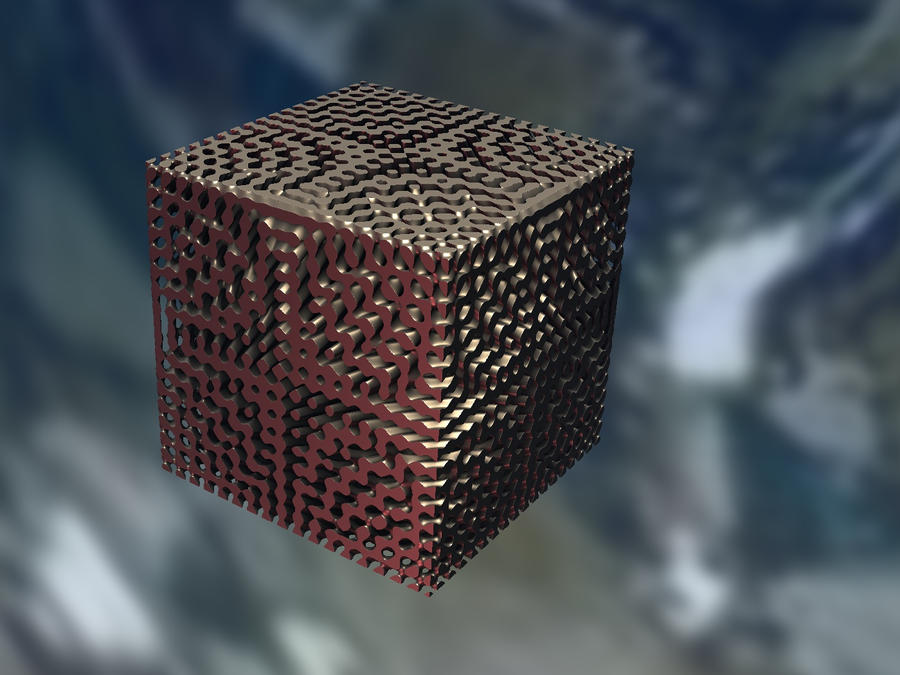
"Scientists at the University of Missouri have created a synthetic 4D metamaterial that can control energy waves on solid surfaces, potentially leading to advancements in quantum mechanics, quantum computing, and earthquake mitigation". ScitechDaily/Fourth Dimension Breakthrough: New Metamaterial Controls Energy Waves)


Is the fourth dimension the source of dark energy? 

And because energy stress happens very often, the receiving particle has no time to remove that extra energy and that particle sends weaker wave movement. So when we think about the fourth dimension the energy level of those particles can be so high, that they send radiation into the 3D universe without breaks. 

Because there is no break in the radiation stress. The receiving particles have no time to remove extra energy. So the particle's energy level turns to the same level as the radiation that hits the particle. That thing causes an effect where a standing wave around the particle isolates it from that radiation. In this model, the 4D material is the source of dark energy. 

Researchers made the 4D material. In that material, there is some high energy component like the magnetic field that is anchored on the material. Then researchers follow how that energy field interacts with other energy fields. The new 4D material can create interaction between 4D and 3D worlds. The new metamaterials can create and conduct energy fields. 

Or other ways. we can say that those metamaterials are not forming energy. They just adjust the wavelength of energy levels. And that thing is very important if the 3D material wants to touch the 4D Particles. 

https://scitechdaily.com/fourth-dimension-breakthrough-new-metamaterial-controls-energy-waves/?expand_article=1                                                                                                                                                          

Wednesday, August 2, 2023

The main problem in nanotechnology is this. How to adjust the moved particles' energy level?

The main problem with nanotechnology is that those systems require an extremely accurate ability to manipulate materials. The systems can play billiards with those particles like single atoms. The problem is how to stop the particle in the right position. And the second problem is how to remove that extra energy from it. If a high-energy particle will transfer to quantum- or nanostructure it transfers energy to those other particles. And that energy breaks that structure. 

The laser rays can push the particle. In that system, lasers push and pull material like a light tweezer. But then the problem is that energy must be removed from that particle. In some versions, the system uses superpositioned and extremely low-temperature particles to remove that energy. The entangled particles also can use for pulling each other in one direction. The idea is that lower-energy participant in quantum entanglement pulls higher-energy participant into it. 


In some theoretical models, the tractor beam is the system that makes quantum entanglement with atoms of the target. The problem is how to make superposition with so complicated systems. So the system must rise the superpositioned particles' energy level higher than the target particles' energy level. Then the tractor beam system must change the target system's energy level to higher than the puller's energy level. Then that pulling system will start to pull entangled particles into it. So theoretically this kind of tractor beam is possible. 

The tractor beam is the system that pulls energy and particles in the wanted direction. Magnets are one version of a tractor beam. And high-power magnetic field can move also other particles than magnetic and ionized particles. But that thing sets limits to its use. The high-power magnetic fields can break the quantum structure. 

Tractor beams can be acoustic or it can be electromagnetic. The acoustic tractor beams can be oscillating nano-diamonds. The high-frequency oscillation makes a vacuum around those nanodiamonds. In some other versions, the system uses oscillating membranes that make a vacuum in the tube. The problem with acoustic systems is that they can move only "large" (mm. or cm.-size)  objects. And in nanotechnology, the objects are extremely small. 

The idea in tractor beam systems is they are pulling objects without breaking them. The tractor beam can use to manipulate objects in nano-scale structures. And transport them in very sensitive systems. In some versions, the tractor beams are a combination of the laser systems that push the object and then the system that pulls energy away from the object that is moved by electromagnetic radiation. 

Researchers created real-life freeze beams for USAF.


Freeze beams are not full-scale science fiction. The idea of those systems is "stolen" from SciFi movies. In real life, this technology might not be suitable for weapon use. But it can use for low-temperature electronics. The weaponized version could be the low-temperature ions that are shot against a target. That loaded with opposite electricity. If the system uses ions the target must load with positive electric load. That allows those ions to impact with it. 

Real-life freeze beam uses plasma or anions and ions whose temperature is very low. Plasma is an ionized gas that can consist of ions that are positive particles. Or anions that are negative ions. The plasma has similar temperatures as neutral gas. And freeze beam is low-energy plasma. If the only wanted effect is the freezing the system must neutralize those ions and anions. In that process, the ions will turn back to neutral gas. 

The ion cannon shoots that low-energy plasma whose temperature is very low against the target. The system can use anti-ionization for turning those ions or anions back to neutral atoms when they travel through the nozzle of the ion cannon. 


"Professor Patrick Hopkins of the University of Virginia is developing a freeze-ray device to cool electronics in spacecraft and high-altitude jets. The technology is based on plasma, which surprisingly cools surfaces before heating them. With a $750,000 grant from the U.S. Air Force, the team is exploring ways to amplify and prolong this cooling effect. (Artist’s concept.)" (ScitechDaily.com/Chilling Breakthrough: The Science Behind a Real-Life “Freeze Ray” Technology for the Air Force)

The system can shoot anions and ions by using internal accelerators. And that thing will remove an electric load of the plasma. The system must neutralize those ions and anions before they impact the targets. Or they will send electrons to the layer. Or remove electrons from the layer. 

Or the system can shoot ions through the electron cloud. And another version is that the system uses some electronegative material like protons that remove extra electrons from anions. So the freeze beam is the beam of an extremely low-temperature gas. The only problem with those systems is that they require neutralizers. 

The use of a freeze beam can have mainly other use than as a weapon. The extremely thin low-temperature gas beams can use to keep microchip temperature low. Or freeze beam can travel above the electric wire. That can use in the superconducting technology. 

The freeze beam can use to freeze electronics. It is used to make frozen gas around the aircraft or between the aircraft and the observer. If that extremely low-temperature gas hovers above the aircraft. It makes that craft invisible to IR sensors. In this system, the frozen gas will hover above the warmer gas layer. The freeze beam can also lower the temperature of the exhaust gas of the jet engines.

https://scitechdaily.com/chilling-breakthrough-the-science-behind-a-real-life-freeze-ray-technology-for-the-air-force/?expand_article=1&expand_article=1 

Hunt for quantum black holes.

“Physicists found no tiny black holes at the LHC, but they just made the hiding place for new physics considerably smaller. Credit: SciTechD...